Bearded Dragon Care Sheet


Istock/Cavan Images
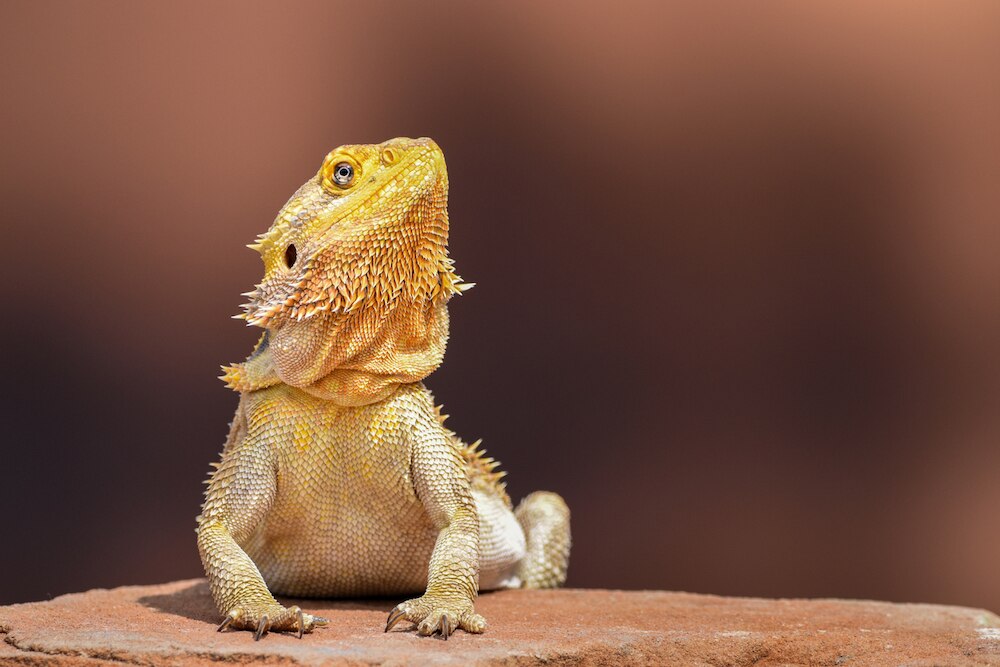
Bearded dragons are one of the most popular pet lizards because they are generally hardy, inquisitive, and beginner-friendly when provided with proper care.
Successful bearded dragon care includes providing the correct habitat, lighting, temperature, nutrition, and routine veterinary care to keep your reptile healthy throughout their life.
This care sheet covers everything you need to know about housing, feeding, health, and daily care.
Key Takeaways
- Bearded dragons are beginner-friendly reptiles that can live eight to 10 years with proper care.
- Adults require a habitat of at least 40 gallons, though larger enclosures are preferred.
- Proper UVB lighting and temperature gradients are essential.
- Juveniles require more insects, while adults eat mostly vegetables.
- Annual veterinary exams help identify health problems early.
Bearded Dragon Overview
Native to central Australia, bearded dragons are affectionately known as "beardies" by reptile enthusiasts.
Their name comes from one of their natural defense mechanisms. When they feel threatened, they can expand the skin beneath their chin, causing it to darken and resemble a beard.
Like all reptiles, bearded dragons can carry infectious organisms, including Salmonella bacteria, which can be transmitted to people. Always wash your hands thoroughly before and after handling your bearded dragon or anything inside its enclosure.
Bearded Dragon Characteristics
|
Difficulty of Care |
Beginner |
|
Average Lifespan |
Eight to 10 years with proper care |
|
Average Adult Size |
Up to 24 inches long, with half of this length being their tail |
|
Diet |
Omnivorous |
|
Minimum Habitat Size |
20 gallons for juveniles; 40+ gallons for adults |
Bearded Dragon Supplies Checklist
Before bringing home a bearded dragon, make sure you have all of the essential habitat, lighting, feeding, and health supplies needed to properly care for them.
Habitat
- Appropriately sized habitat (20 gallons for juveniles; 40+ gallons for adults)
- Substrate
- Moss
- Hideaway
- Climbing décor
- Live or artificial plants
Heating and Lighting
- Heat lamp
- Heat fixture
- Under-tank heater
- UVB light and fixture
- Thermometers
- Humidity gauge (hygrometer)
- Mister
Food and Feeding Supplies
- Bearded dragon food
- Live feeder insects
- Treats
- Food dish
- Water dish
- Mealworm dish
- Cricket keeper
- Cricket food
- Cricket quencher
Supplements
- Multivitamin supplement
- Calcium supplement with vitamin D
- Calcium supplement without vitamin D
Having these supplies ready before bringing your bearded dragon home helps create a safe, healthy environment from day one.
Bearded Dragon Habitat Setup
A properly designed habitat is one of the most important parts of bearded dragon care. Providing the correct enclosure size, temperatures, lighting, humidity, substrate, and enrichment helps keep your bearded dragon healthy and active.
Bearded Dragon Tank Size
A juvenile bearded dragon should be housed in an enclosure that is at least 20 gallons, while a single adult should have a habitat of 40 gallons or larger. Whenever possible, provide the largest enclosure you can.
All habitats should have a secure screened lid to provide ventilation and prevent escapes.
Setting Up Your Habitat
Only one adult male bearded dragon should be housed per enclosure, as males are highly territorial and may become aggressive toward one another.
While compatible females can sometimes live together, they should be monitored closely and provided with adequate space.
Avoid housing males and females together unless breeding is intended. Females should not be bred until they are at least 2 years old because younger dragons may experience egg-laying complications.
Never house different reptile species together.
Bearded Dragon Temperature
Bearded dragons require a temperature gradient so they can move between warmer and cooler areas to regulate their body temperature.
|
Habitat Area |
Recommended Temperature |
|
Warm/basking side |
100 F |
|
Cool side |
75 F |
Check habitat temperatures every day to ensure both zones remain within the recommended range.
For the most accurate monitoring, place one thermometer on the warm side of the enclosure and another on the cool side. A digital infrared (point-and-shoot) thermometer can also be used to quickly measure surface temperatures.
In addition to proper heat, bearded dragons require full-spectrum UVB lighting to help them absorb vitamin D and metabolize calcium.
Provide 10–12 hours of UVB lighting each day and follow the manufacturer's recommendations for bulb placement to ensure adequate UVB exposure.
Even if a UVB bulb still produces visible light, replace it approximately every six months, as UVB output decreases over time.
Bearded Dragon Lighting
Proper heat and UVB lighting are essential for a bearded dragon's digestion, calcium metabolism, and overall health.
Because bearded dragons are ectotherms, they rely on external heat sources to regulate their body temperature.
|
Lighting Requirement |
Recommendation |
|
Basking heat source |
Incandescent heat bulb or ceramic heat emitter |
|
Warm-side temperature |
100 F |
|
UVB lighting |
Full-spectrum UVB bulb |
|
Daily UVB exposure |
10–12 hours |
|
UVB bulb replacement |
Every six months |
Position an incandescent heat bulb or ceramic heater over one end of the enclosure to create a basking area. The correct bulb wattage depends on the enclosure size, the distance from the basking area, and the ambient room temperature.
Adjust the bulb wattage as needed to maintain the recommended temperature gradient throughout the enclosure.
In addition to heat, provide a full-spectrum UVB light to help your bearded dragon absorb vitamin D and metabolize calcium properly.
Because UVB bulbs vary in strength and design, always follow the manufacturer's recommendations for bulb placement.
Even if a UVB bulb continues to produce visible light, replace it approximately every six months, as its UVB output decreases over time.
Bearded Dragon Humidity
Bearded dragons thrive in a habitat with a humidity level between 30% and 50%, which helps support healthy skin, shedding, and respiratory health.
To increase humidity:
- Mist your bearded dragon and enclosure décor as needed.
- Add non-toxic live plants to the habitat.
If humidity is too high, improve ventilation so excess moisture can escape.
Use a hygrometer to monitor humidity levels every day and make adjustments as needed to keep the enclosure within the recommended range.
Bearded Dragon Substrate
Choose a substrate that supports your bearded dragon's health while minimizing the risk of accidental ingestion.
Avoid using the following as substrate because they are indigestible and may cause gastrointestinal obstruction if swallowed:
- Gravel
- Wood chips
- Crushed walnut shells
If you choose to use a loose substrate, such as sand, feed your bearded dragon in a separate dish or feeding container rather than directly on the enclosure floor. This helps reduce the risk of accidentally ingesting substrate while eating.
A well-furnished habitat encourages natural behaviors such as basking, climbing, hiding, and exploring while helping your bearded dragon feel secure.
Food Dishes
Offer food in a shallow dish or separate feeding container instead of placing it directly on the enclosure floor. This helps reduce the risk of your bearded dragon accidentally swallowing substrate while eating.
Worm dishes and cricket feeders are useful for keeping live feeder insects contained in one area.
Hiding Areas
Provide at least two hiding places—one on the warm side of the enclosure and one on the cool side.
Hideouts give bearded dragons a safe place to rest and escape the basking area when needed. However, monitor your dragon's behavior to ensure they are not spending all of their time hiding, as excessive hiding may reduce beneficial UVB exposure.
Climbing Branches and Basking Rocks
Include at least one sturdy basking rock or climbing branch so your bearded dragon can climb, exercise, and bask naturally.
Branches and rocks should be stable and large enough to safely support your dragon's body to prevent injuries caused by falling decor.
Moss
Moist sphagnum moss can be placed inside a hide on the warm side of the enclosure to create a humidity hide that supports healthy shedding.
Replace moss regularly to prevent mold growth and keep the enclosure clean.
Plants
Non-toxic live plants can help enrich your bearded dragon's habitat while also supporting healthy humidity levels.
Cleaning and Habitat Maintenance
Regular cleaning is essential for preventing disease and keeping your bearded dragon's habitat healthy.
Spot-clean the enclosure every day by removing waste, soiled substrate, and uneaten food. Food and water dishes should also be washed daily to help prevent bacterial growth.
A complete habitat cleaning and disinfection should be performed at least once a week, or more often if multiple bearded dragons share the enclosure.
Because reptiles can carry infectious organisms such as Salmonella, always wash your hands before and after handling your bearded dragon or anything inside its habitat.
To thoroughly clean a bearded dragon enclosure:
- Move your bearded dragon to a secure temporary enclosure.
- Remove all substrate, décor, food dishes, and accessories.
- Scrub the empty enclosure and furnishings with a reptile-safe habitat cleaner or a 3% bleach solution.
- If using bleach, allow the solution to remain on surfaces for at least 10 minutes to disinfect properly. If using a commercial cleaner, follow the manufacturer's instructions.
- Rinse the enclosure and all accessories thoroughly to remove any remaining cleaner or bleach residue.
- Allow everything to dry completely.
- Add fresh substrate, clean accessories, and return your bearded dragon to the enclosure.
Bearded Dragon Diet
Bearded dragons are omnivores that require a balanced diet of insects, vegetables, and fruits, with the proportions changing as they mature.
|
Life Stage |
Insects |
Vegetables and Fruit |
|
Juveniles |
70% |
30% |
|
Adults |
20–30% |
70–80% |
Young bearded dragons require a protein-rich diet consisting primarily of gut-loaded insects, while adults should eat proportionally more plant matter.
Gut-loading means feeding insects a nutrient-rich diet before they are offered to your bearded dragon. These specialized insect diets are fortified with vitamins and minerals, allowing the insects to pass those nutrients on to your reptile during feeding.
Safe feeder insects include:
- Crickets
- Mealworms
- Hornworms
- Waxworms
- Calciworms
- Roaches
- Superworms
Only offer as many insects as your bearded dragon can eat during one feeding session. Remove any uneaten insects afterward, as they may bite or injure your lizard.
Feeder insects should never be larger than the space between your bearded dragon's eyes.
Vegetables and fruits may include:
Fruits
- Kiwi
- Mango
- Banana
- Papaya
- Cantaloupe
- Watermelon
- Apple
Vegetables
- Dark leafy greens
- Parsley
- Cabbage
- Bell peppers
- Broccoli
- Squash
- Carrots
- Green beans
- Bok choy
- Escarole
- Cilantro
- Endive
- Prickly pear
Cut all fruits and vegetables into bite-sized pieces before feeding.
Remove uneaten produce after approximately 10 hours to prevent spoilage and bacterial growth.
Because fruit is naturally high in carbohydrates and sugar, it should be offered in moderation to help prevent unhealthy weight gain.
Water
Fresh, clean water should always be available and replaced daily. Because bearded dragons can absorb water through their skin, the water dish should be shallow but large enough for your dragon to soak if needed.
Foods To Avoid
Never feed your bearded dragon:
- Fireflies
- Onions
- Mushrooms
These foods are toxic and may cause serious illness or death.
High-oxalate foods should also be avoided because they interfere with calcium absorption, including:
- Avocados
- Beet greens
- Spinach
- Rhubarb
Bearded Dragon Vitamin Supplements
Bearded dragons require regular calcium and vitamin supplementation to support healthy bone development and overall health.
Three supplements should be included in their routine:
- Calcium supplement with vitamin D
- Calcium supplement without vitamin D
- Reptile multivitamin powder
Alternate the two calcium supplements daily by using a calcium supplement with vitamin D one day and a calcium supplement without vitamin D the next. Dust feeder insects with a reptile multivitamin once each week.
A simple way to coat feeder insects is to place them in a bag or disposable container with the powdered supplement and gently shake until they are evenly coated.
Routine Bearded Dragon Care
Routine care, including proper shedding support and nail maintenance, helps keep your bearded dragon healthy and comfortable.
Shedding
Bearded dragons shed their skin regularly, and maintaining proper habitat humidity is one of the best ways to support healthy shedding.
Keep the enclosure's humidity between 30% and 50% to encourage normal shed cycles.
If your bearded dragon is having difficulty shedding, you can soak them in a large, shallow container of warm water. The container should be wide enough for your dragon to submerge its body while keeping its head safely above the water.
Nail Care
Most bearded dragons naturally wear down their nails and do not require regular trimming.
However, dragons that are handled frequently or have limited opportunities to wear down their nails may occasionally need a trim.
If your bearded dragon's nails become overly long, damaged, or broken, consult your veterinarian for guidance on proper nail care.
Bearded Dragon Health Care
Routine veterinary care and regular health monitoring are essential for helping your bearded dragon live a long, healthy life.
Annual Care
Bearded dragons should have a veterinary wellness examination once every year.
For veterinary visits:
- Transport your bearded dragon in a secure travel cage or cat carrier.
- Bring photos of the enclosure, lighting, heating equipment, and diet if your veterinarian has husbandry questions.
- Bring a fresh fecal sample unless your veterinarian prefers to collect one during the appointment.
Signs of a Healthy Bearded Dragon
Healthy bearded dragons typically have:
- Clean, clear eyes
- Healthy skin without ulcers or retained shed
- A good appetite
- A bright, alert attitude
- A clean vent
- No lumps or swellings
- Normal posture and mobility
- Regular basking behavior
- A healthy body condition and weight
Signs of an Unhealthy Bearded Dragon
Contact your veterinarian if your bearded dragon develops:
- Swollen, sunken, closed, or draining eyes
- Skin ulcers or lesions
- Refusal to eat (outside of normal seasonal appetite changes)
- Failure to bask
- Lethargy
- Discharge around the vent
- Lumps or swellings
- Difficulty walking or maintaining normal posture
- A sunken abdomen
- Retained shed, especially around swollen toes
Common Bearded Dragon Illnesses
Some of the most common medical conditions seen in bearded dragons include:
- Intestinal parasites
- Gastrointestinal (GI) impaction
- Metabolic bone disease
- Dystocia (egg binding)
- Eye infections and corneal ulcers
- Respiratory disease
- Skin infections
- Traumatic injuries
Bearded Dragon FAQs
Are bearded dragons good pets?
Yes. Bearded dragons are considered one of the best pet lizard species for beginners.
They are known for their curious, docile personalities, tolerate handling well, and generally require straightforward daily care when their habitat, lighting, and diet are properly maintained.
They also tend to do well with gentle, supervised interaction and rarely bite or scratch.
How long do bearded dragons live?
With proper care, the bearded dragon lifespan is typically eight to 10 years.
Providing appropriate nutrition, UVB lighting, habitat conditions, and routine veterinary care can help maximize their lifespan.
How big do bearded dragons get?
Adult bearded dragons can grow to approximately 24 inches (2 feet) in total length, including their tail.
Do bearded dragons need UVB lighting?
Yes. Bearded dragons require 10–12 hours of UVB lighting every day to properly absorb calcium and maintain healthy bones.
Can bearded dragons live together?
Adult male bearded dragons should never be housed together because they are highly territorial and may become aggressive.
Compatible females may sometimes live together if they have adequate space and are monitored carefully.
What do bearded dragons eat?
Bearded dragons are omnivores. Juveniles eat mostly live insects with some vegetables and fruit, while adults eat mostly vegetables with fewer insects.
How often should I take my bearded dragon to the vet?
Healthy bearded dragons should receive a veterinary wellness examination once a year, including a fecal examination if recommended by your veterinarian.