Can Dogs Eat Bananas?



Adobe_stock/Ivan
Dogs can safely eat bananas in moderation when they are properly prepared and served in appropriate portions.
Bananas contain fiber, vitamins, and minerals, making them a popular treat option for many dogs. However, because bananas are naturally high in sugar, portion control is important.
Learn whether bananas are good for dogs, how much your dog can safely eat, and the best ways to serve bananas as a treat.
Key Takeaways
- Bananas are safe for most dogs when fed in moderation.
- Bananas contain fiber, potassium, vitamin C, vitamin B6, and other nutrients.
- Too much banana can contribute to weight gain and digestive upset because of its sugar content.
- Dogs should never eat banana peels.
- Treats, including bananas, should make up no more than 10% of a dog's daily calories.
Benefits of Bananas for Dogs
Bananas are safe for most dogs to eat in moderation, but they should be viewed as an occasional treat rather than a nutritional necessity.
Like many fruits, bananas should be fed in small amounts, especially to puppies and small-breed dogs such as Chihuahuas and Yorkshire Terriers, to help prevent digestive upset.
Bananas contain several vitamins and minerals, including:
- Fiber
- Vitamin C
- Vitamin B6
- Potassium
- Magnesium
- Biotin
Although bananas contain beneficial nutrients, dogs typically eat only small portions of the fruit. As a result, bananas should complement a balanced diet rather than serve as a significant source of nutrition.
Potential Risks of Bananas for Dogs
While bananas are safe for most dogs, their natural sugar content can make them a poor choice for some pets.
Bananas contain more sugar than many dog treats, and feeding too much can contribute to health concerns over time.
Excessive sugar intake may increase the risk of health issues such as obesity and diabetes.
Dogs that are already overweight, diabetic, or managing other medical conditions should generally avoid bananas and other high-sugar fruits unless specifically approved by a veterinarian.
Can Puppies Eat Bananas?
Yes, puppies can eat bananas in moderation, but they should be introduced slowly and fed in smaller portions than adult dogs.
Because puppies have developing digestive and immune systems, it is generally best to introduce only one new food or treat at a time.
Offering new foods individually makes it easier to identify the cause of any digestive upset or food sensitivity if symptoms develop.
If your puppy experiences vomiting, diarrhea, or other signs of stomach upset after eating bananas, stop feeding the fruit and consult your veterinarian.
Can Dogs Eat Banana Peels?
No, dogs should not eat banana peels because they can be difficult to digest and may cause intestinal blockages.
Although banana peels are not considered toxic to dogs, they may contain pesticide residue and are much harder to digest than the fruit itself.
Because of their tough texture, banana peels can sometimes become lodged in the digestive tract and lead to a blockage, especially if a dog swallows a large piece.
Signs of an Intestinal Blockage in Dogs
Watch for symptoms such as:
- Vomiting
- Loss of appetite
- Abdominal pain
- Weakness or lethargy
- Diarrhea
- Constipation
- Weight loss
If you suspect your dog has eaten a banana peel and may be experiencing an intestinal blockage, seek emergency veterinary care immediately.
How Much Banana Can Dogs Eat?
Dogs can eat bananas in moderation, but bananas should only make up a small portion of their overall diet.
Like all treats, bananas should account for no more than 10% of your dog’s daily calorie intake. The remaining 90% should come from a complete and balanced dog food diet that meets AAFCO nutritional standards.
Because bananas are naturally high in sugar, a whole banana is generally too much for most dogs, especially puppies and small breeds.
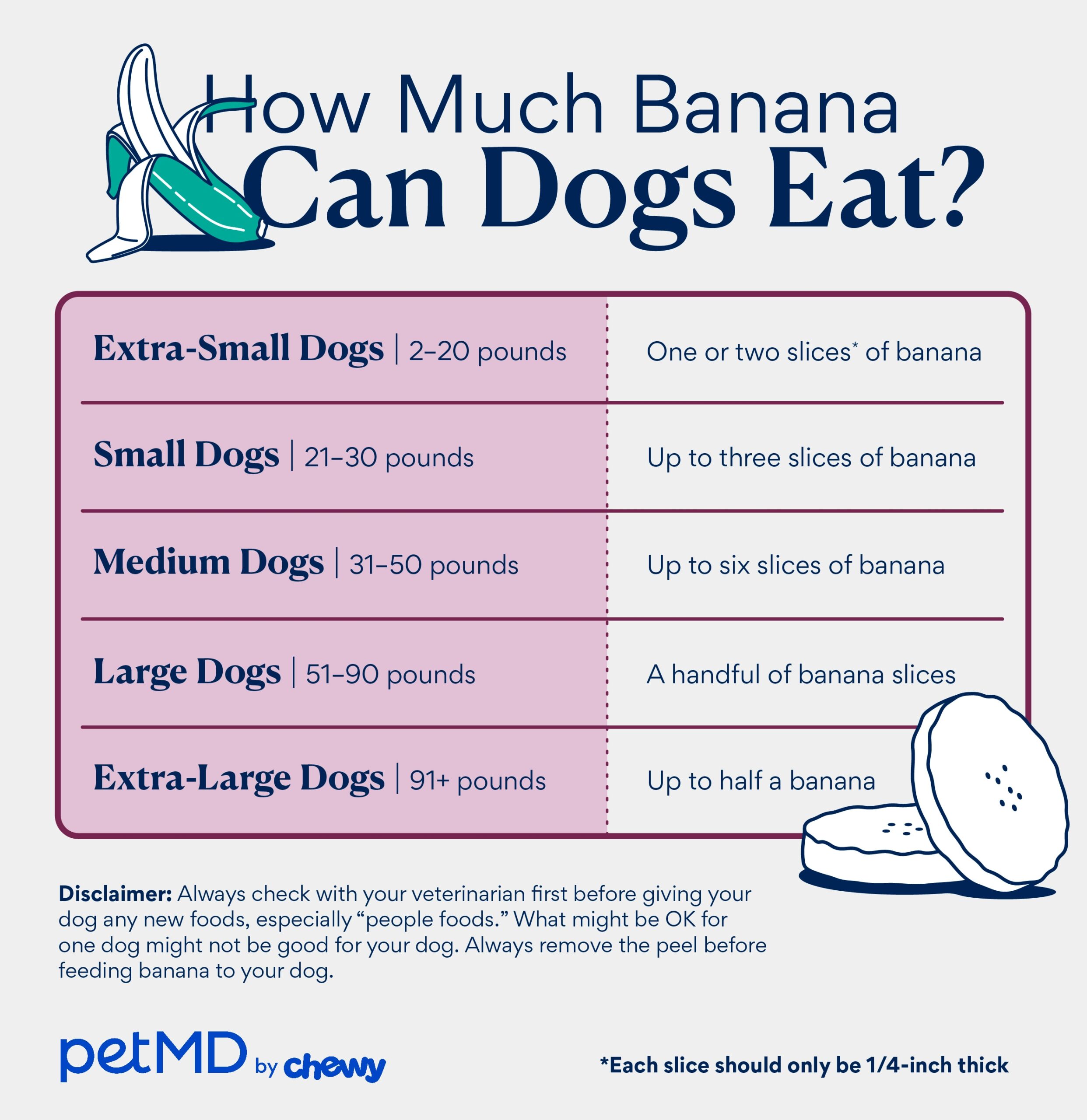
The following are general serving recommendations. Each banana slice should be approximately ¼-inch thick.
| Dog Size | Serving Size | Examples |
|---|---|---|
| Extra-small (2–20 lbs) | 1–2 slices | Yorkies, Chihuahuas, Pomeranians, Pugs |
| Small (21–30 lbs) | Up to 3 slices | Basenjis, Beagles, Miniature American Shepherds |
| Medium (31–50 lbs) | Up to 6 slices | Basset Hounds, Border Collies, Australian Cattle Dogs |
| Large (51–90 lbs) | A handful of slices | Pit Bulls, German Shepherds, Labrador Retrievers, Australian Shepherds |
| Extra-large (91+ lbs) | Up to half of a banana | Newfoundlands, Bernese Mountain Dogs, Saint Bernards, Great Pyrenees |
Signs Your Dog May Have Eaten Too Much Banana
Monitor for symptoms such as:
- Decreased appetite or loss of appetite
- Fatigue
- Drinking less water
- Gulping
- Licking their lips, the air, or surrounding objects
If you notice these signs, contact your veterinarian for guidance.
When To Seek Immediate Veterinary Care
Seek veterinary attention immediately if your dog develops:
- Vomiting
- Severe diarrhea
- Blood in vomit or stool
- Weakness
- Collapse
How To Feed Bananas to Dogs Safely
To safely feed bananas to dogs, remove the peel, serve small portions, and cut the fruit into bite-sized pieces.
Preparing Bananas for Dogs
Before serving bananas to your dog:
- Remove the banana peel completely.
- Cut the banana into small pieces approximately ¼-inch thick.
- Feed bananas in moderation as an occasional treat rather than a regular part of the diet.
Ways To Serve Bananas to Dogs
Once prepared, bananas can be offered in several dog-friendly ways:
- Fresh: Cut bananas into small slices and offer them as individual treats.
- Mashed: Mash a small amount of banana and add it to your dog’s regular food as a topper.
- Frozen enrichment treats: Freeze mashed banana inside a KONG® toy for a longer-lasting snack. You can also add a small amount of dog-safe peanut butter for additional flavor.
- Fruit smoothies: Blend frozen banana pieces with dog-safe fruits such as strawberries and blueberries, then mix with plain, sugar-free, xylitol-free yogurt. Serve in moderation as a refreshing treat.
- Homemade dog treat recipes: Bananas can also be incorporated into dog-friendly baked treats, such as peanut butter and banana dog cupcakes.
Can Dogs Be Allergic to Bananas?
Yes, dogs can be allergic or sensitive to bananas, although true banana allergies are considered uncommon.
When introducing bananas for the first time, offer only a small amount and monitor for signs of digestive upset such as vomiting, diarrhea, abdominal pain, or lethargy.
Some dogs with food allergies may also develop chronic skin irritation, itchiness, or recurrent ear infections.
Can Dogs Eat Bananas FAQs
Are bananas good for dogs with diarrhea?
No, bananas should not be used as a home treatment for diarrhea in dogs.
Although bananas contain fiber that may help with certain digestive issues, they are also relatively high in sugar. If your dog has diarrhea or other gastrointestinal concerns, contact your veterinarian for guidance on appropriate treatment.
Can dogs eat banana chips or dried bananas?
No, banana chips and dried bananas are generally not recommended for dogs.
If not chewed thoroughly, dried banana products can absorb water, swell, and potentially contribute to an intestinal obstruction. Store-bought banana chips also often contain added sugar, salt, preservatives, or other ingredients that are not ideal for dogs.
Can dogs eat banana bread?
Can dogs eat banana pudding?
No, banana pudding is not recommended for dogs.
Most banana puddings contain significant amounts of sugar, preservatives, and other ingredients that may be unhealthy or potentially toxic for dogs.
Can dogs eat frozen bananas?
Yes, dogs can eat small amounts of frozen banana when it is served safely.
However, giving a dog an entire frozen banana is not recommended because the portion size is too large and may create choking or intestinal blockage risks.
A safer option is to mash a small amount of banana and freeze it before serving as a treat or enrichment snack.
Can dogs eat bananas every day?
Most healthy dogs can eat small amounts of banana regularly, but bananas should be treated as an occasional snack rather than a daily dietary staple.
Because bananas are naturally high in sugar, moderation is important to help prevent weight gain and other health concerns.