Why Do Cats Purr? 5 Meanings Behind a Purring Cat


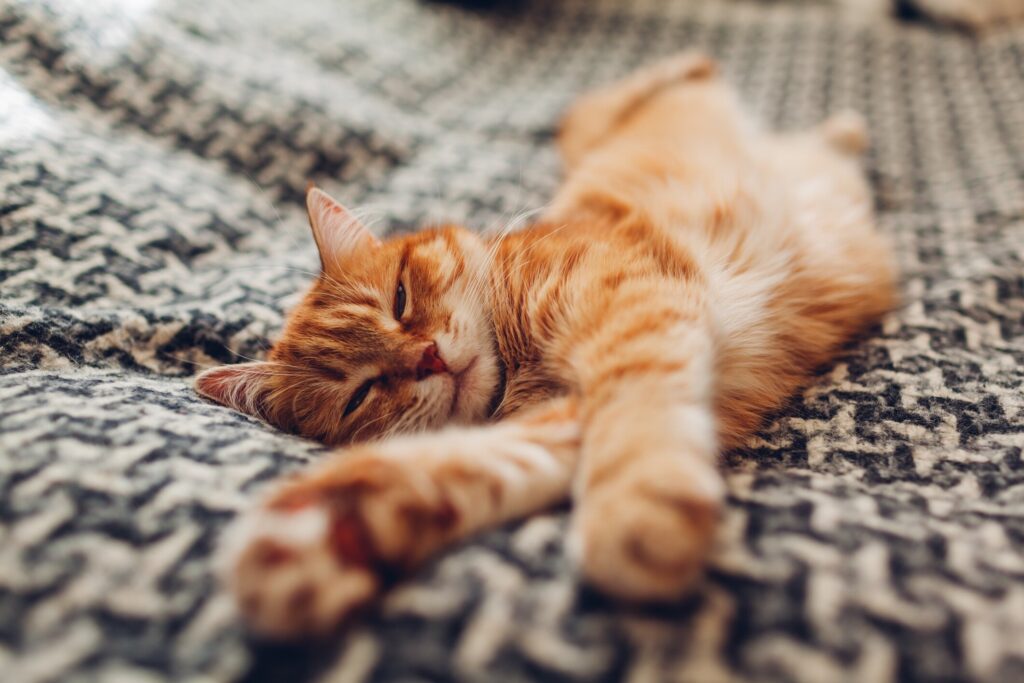
Maryviolet/iStock / Getty Images Plus via Getty Images
Cats purr for many reasons—not just happiness. Purring can signal contentment, stress, a desire for attention, or even illness, depending on the situation and your cat’s body language.
That soft, rumbling sound is one of the most recognizable traits of cats—but it’s also one of the most misunderstood. While many people associate purring with a happy cat, the truth is more complex.
Understanding why your cat is purring can help you better respond to their needs.
Key Takeaways
- Cats purr for both positive and negative reasons.
- Common meanings include contentment, stress relief, greeting, attention-seeking, and illness.
- Body language and context are key to understanding purring.
- Kittens begin purring as early as two days old.
- Sudden or unusual purring patterns may signal a health concern.
How Do Cats Purr?
First, what produces a cat’s motor-like purring sound? A purr is a voluntary behavior, a vocalization produced by cats with their mouth closed. During breathing, the air is forced over the glottis (the opening between the vocal folds in the voice box) it opens and closes in 20- to 40-millisecond cycles, separating the vocal folds.
This activity produces the purring sound. The purr consists of a continuous vibration as the cat inhales and exhales, with a brief pause in between the two phases. The cat also uses the diaphragm in producing a continuous purr sound.
Why Do Cats Purr?
So, what does it mean when a cat purrs? Cat purring is a complex vocalization that can mean many different things.
1. Cats Purr When They’re Content
A cat purring has mostly been associated with contentment, excitement, or other positive emotional states. When a cat is purring with content, they have a relaxed facial expression and body language. Cats have been known to purr when they are:
-
In a warm, familiar environment
-
Eating (or just after eating)
-
Lying in their pet parent’s lap
2. Cats Purr When They’re Anxious
Some cats purr when they are anxious. They may walk around the house alternating between purring and meowing. This may be a coping mechanism to help reduce their anxiety.
Other cats may purr when they are being examined by a veterinarian or once they get home from the veterinary clinic. If your cat is purring in these scenarios, they may be trying to recover and self-soothe from a stressful situation.
3. Cats Purr When They’re Greeting
Cats may utter a short purr when greeting people or other cats. Typically, this is a friendly interaction with the other party. Mother cats can also purr when approaching their kittens.
4. Cats Purr When They Want Attention
Cats may purr when soliciting physical attention, such as a pet or neck scratch from people. They may also purr when they rub their face or body against another cat, a person, or an object.
5. Cats Purr When They’re Sick
Cats can purr when they are healthy and feeling good, but cats can also purr when they are sick or in pain. By purring, the cat may be asking for care. Some cats may even purr before they die; the purring sound may potentially be a comforting sound for them.
Why Do Kittens Purr?
Kittens can purr as young as 2 days of age. They purr when they are nursing from their mother and only stop long enough to swallow. Kittens also tend to purr in similar situations as adult cats—such as when greeting littermates or other cats, or when requesting food.
Understanding Cat Purring
When a cat is purring, look at their body language and the situation to determine why.
A purring cat that approaches you with their tail held up may be greeting you and soliciting attention. But if the cat is crouched down with their ears pulled slightly to the side while purring, they may not be feeling well.
Cat Purring FAQs
Why do cats purr when you pet them?
When a cat purrs while you pet them, it’s an indication that they like that interaction. It may also be a signal for you to continue petting the cat.
Why do cats purr and knead?
Purring while kneading may be a residual behavior from kittenhood, as kittens tend to knead and purr while nursing. For adult cats, this may be a behavior pattern they perform when in a positive emotional state.
Are cats happy when they purr?
Cats can purr when they are happy, but they can also purr if they’re anxious or not feeling well. Look at the cat’s body language to determine the cause.
References
Beaver, B. (2003) Feline Behavior: A Guide for Veterinarians. 2nd ed. Philadelphia: Saunders.
Brown, S and Bradshaw, J. (2014) ‘Communication in the domestic cat: within- and between-species’, in Turner, D. C. and Bateson, P. (eds) The Domestic Cat: the Biology of its Behaviour. 3rd ed. Cambridge University Press, pp. 37–59.
Tavernier, C. et al. (2020) “Feline vocal communication,” Journal of Veterinary Science, 21(1), pp. 1–17.