Paralysis in Dogs: Causes, Symptoms, and How To Manage It


RyanJLane/E+ via Getty Images
Paralysis in dogs is the inability to move one or more parts of the body due to damage affecting the brain, spinal cord, nerves, or muscles.
It can develop suddenly or gradually and is often a medical emergency that requires immediate veterinary care. Understanding the signs, causes, treatment options, and recovery outlook can help you act quickly if your dog develops paralysis.
Key Takeaways
- Paralysis in dogs is the loss of movement in one or more limbs caused by a problem affecting the brain, spinal cord, nerves, or muscles. It may be partial (paresis) or complete.
- Paralysis in dogs is a medical emergency. If your dog suddenly cannot walk, drags their limbs, or loses bladder or bowel control, seek veterinary care immediately.
- Common causes of paralysis in dogs include spinal injuries, intervertebral disc disease (IVDD), degenerative myelopathy, tick paralysis, infections, and tumors.
- Recovery depends on the underlying cause and how quickly treatment begins. Some dogs recover with medication, surgery, and rehabilitation, while others can maintain a good quality of life with long-term supportive care.
What Is Paralysis in Dogs?
Paralysis in dogs is the loss of movement in one or more limbs. It happens when signals can no longer travel normally between the brain, spinal cord, nerves, and muscles.
Depending on the cause, paralysis may be partial (paresis) or complete. It can affect the:
- Back legs
- Front legs
- All four limbs (tetraplegia)
Front-leg paralysis is usually caused by damage to the nerves in the neck, shoulder, or brachial plexus.
Hind-leg paralysis most often results from injury to the lower back, tailbone, or lumbosacral plexus. Damage to any of these structures disrupts nerve communication, preventing normal movement.
Nerve trauma is the most common cause of leg paralysis in dogs.
If your dog suddenly cannot walk, is dragging one or more limbs, or you suspect paralysis, seek veterinary care immediately.
This is a medical emergency.
Prompt treatment is critical because many causes of paralysis can worsen rapidly, reducing the chances of recovery.
Symptoms of Paralysis in Dogs
Symptoms of paralysis in dogs include:
- Inability to move all four legs
- Inability to move the hind legs
- Inability to flex the joints in affected limbs
- Lack of full-limb control (paresis)
- Dragging the hind legs
- Knuckling or tripping over the paws
- Weakness
- Loss of muscle mass (atrophy)
- Neck pain, characterized by holding the head down, front-leg lameness, and reluctance to move the head or jump
- Spinal pain or leg pain
- Lack of pain response in the paws
- Limp tail
- Limping or abnormal gait
- Inability to urinate or dribbling urine
- Inability to have bowel movements or fecal incontinence
- Constipation
- Horner’s syndrome on the same side of the body as a paralyzed front leg, characterized by a small pupil, partially closed eyelid, and third eyelid prominence
Causes of Paralysis in Dogs
A dog can become partially or completely paralyzed for many reasons.
Trauma, such as being hit by a car, is the most common cause of paralysis in dogs.
Although paralysis can occur in any dog breed and at any age, some breeds are more prone to medical conditions that might lead to paralysis, such as:
- Intervertebral disc disease (IVDD). IVDD results from protrusion of disc material between the spinal bones, which causes spinal cord compression. Dachshunds, Basset Hounds, and other dogs with long backs are predisposed to IVDD.
- Degenerative myelopathy (DM). DM is a genetic condition that causes destruction of the nerves that originate from the spinal cord. Older dogs and German Shepherds, Boxers, Welsh Corgis, and Chesapeake Bay Retrievers are prone to this condition.
- Fibrocartilaginous embolism (FCE). An FCE, or spinal stroke, occurs when a piece of cartilage from an injured vertebral disc enters the bloodstream and lodges in a spinal artery, blocking blood flow to a section of the spinal cord.
- This condition is more common in large and giant breeds, such as Labrador Retrievers and Bernese Mountain Dogs; however, small breeds such as Miniature Schnauzers and Yorkshire Terriers have a high incidence as well.
Additional causes of paralysis in dogs include:
- Tick paralysis
- Distemper virus infection
- Rabies virus infection
- Fungal diseases
- Nervous system inflammation or infection (viral or bacterial)
- Infection or inflammation of the muscles (polymyositis)
- Inflammation of the nerves (polyneuritis)
- Blocked spinal blood vessel (embolus)
- Blocked blood flow to the rear legs (aortic embolus)
- A tumor or cancer in the brain or spinal cord
- Botulism
- Myasthenia gravis
- Hypothyroidism
- Genetic malformation of the spine or vertebral column
- Severe or chronic exposure to pesticides or insecticides, especially organophosphates, which can cause disruption to the nervous system
How Veterinarians Diagnose Paralysis in Dogs
If your dog is paralyzed or is showing signs of partial paralysis, your vet will perform a complete physical exam, including checking their neurologic reflexes.
Part of the neurologic exam will assess your dog’s limbs, head, legs, and back for pain or lack of a normal pain response.
It’s important to share all information with your vet about your dog’s health, including any possible injuries and any travel or tick exposure they may have had.
Your vet may also perform blood work, including a complete blood count and chemistry panel, and urinalysis.
These tests will detect inflammation, infection, or the presence of underlying disease. They may also recommend testing for a tick-transmitted disease.
While X-rays may be helpful initially to look for spinal abnormalities, a CT scan or MRI will provide a more detailed picture of your dog’s brain and spine.
A sample of cerebrospinal fluid (CSF) may also be taken by your vet to look for signs of inflammation or infection.
Results of these preliminary tests could indicate a need for a biopsy of the muscle or nerve.
Electrical nerve stimulation can be used to determine the exact location of a nerve injury, and to determine the injury’s extent or assess function of the injured nerve.
It’s extremely important to determine the exact location of the problem, because the closer a nerve injury is to the muscle, the better the chance for recovery from paralysis.
Treatment of Paralysis in Dogs
Depending on the underlying cause of your dog’s paralysis, they may require hospitalization with intensive care.
Paralyzed dogs are often hospitalized during the diagnostic period because spinal X-rays, CT scans, MRI, CSF collection, and biopsies require anesthesia.
Nerves can regenerate to some extent after an injury, but it is a slow process (1 inch per month) and return to full function is determined by exactly locating the nerve injury.
Sometimes the injury is too substantial for the nerves to ever be able to heal.
There’s not much your vet can do to assist nerve regeneration, although laser therapy and acupuncture have shown some promise in helping to speed up the process.
Anti-inflammatory medications such as carprofen or prednisone may be prescribed if swelling is present.
Muscle-relaxing medications such as methocarbamol may be used, especially in dogs with IVDD.
Pain medications are also important to keep affected dogs comfortable—mild pain can be controlled with oral medications while severe pain will require hospitalization for intravenous (IV) medications.
If your dog is unable to urinate or is having trouble urinating, they will need a urinary catheter placed to empty their bladder while they are hospitalized.
Dogs with IVDD or certain tumors can undergo surgery to decompress the affected areas and at times, limb function can be restored.
Recovery and Management of Paralysis in Dogs
The likelihood of a dog returning to full function depends on the cause of their paralysis.
The combination of paralysis and Horner's syndrome indicates that a nerve root has been torn and the chance of recovery from this type of paralysis is unlikely.
However, if your dog has some voluntary movement of their limb(s), along with pain sensation and the presence of spinal reflexes over the first one to two months, their prognosis for recovery is better.
Dogs that have lost the ability to urinate will require bladder expression at home on a regular basis. Your vet will teach you how to safely express your dog’s bladder. Wearing a doggy diaper will help keep dogs with fecal incontinence clean.
During the recovery process, it is crucial that a paralyzed dog wear a protective cone to avoid self-harm.
If your dog has pain or lacks sensation in the limb(s), they may chew or bite the area, making the cone important in their recovery.
If there is no movement or sensation in a single affected limb in three to six months, amputation may be the best option to give your dog the best quality of life.
Your vet will advise you on what is best for your pup.
Proper nursing care of paralyzed dogs is important to prevent pressure sores. Techniques to keep the dog as comfortable as possible include:
- Always keeping them on a soft surface.
- Rotating their position.
- Applying heat and massage.
- Using a sling to walk them.
Using a sling or long, soft cloth passed under your dog’s belly and held up on either side of the body, assist your pup while walking by carrying some of their body weight for them.
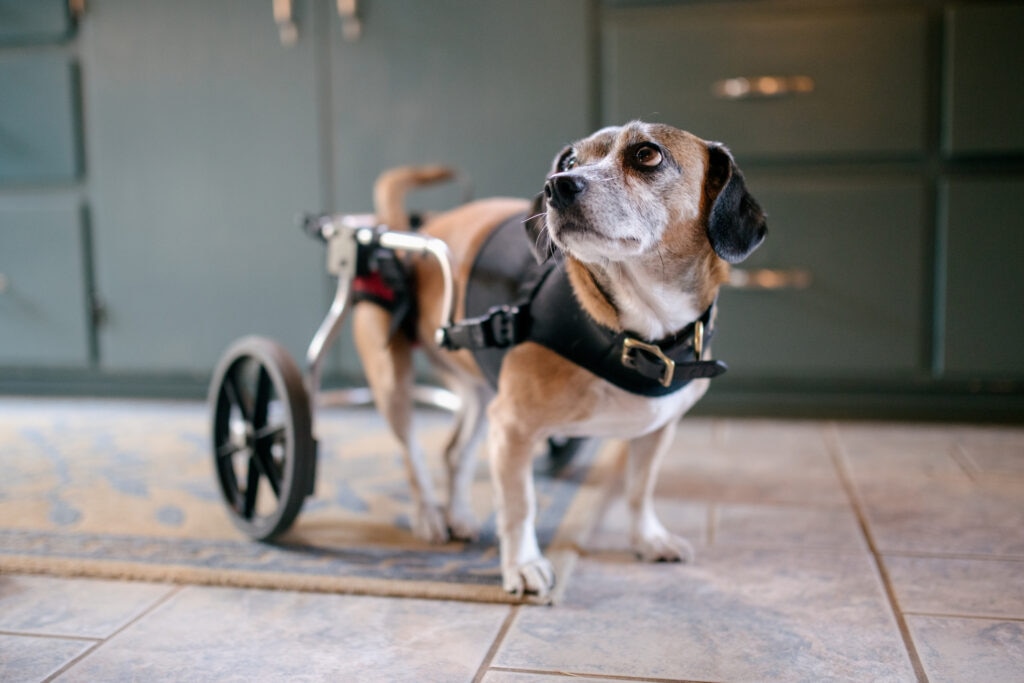
Your dog might be a candidate for a special wheelchair to assist them in maintaining mobility while paralyzed.
Dogs can adapt well to being paralyzed.
With proper care given by an attentive pet parent, they can live a long, happy, healthy life.
Prevention of Paralysis in Dogs
Ensuring that your dog is always supervised can help prevent any possible injury or trauma that could cause paralysis.
Vaccination is also crucial to help prevent viral diseases, such as distemper and rabies, that can cause paralysis.
It’s also important to keep your dog on year-round tick prevention to help protect them against tick paralysis.
Screening breeding dogs for genetic conditions like myasthenia gravis and degenerative myelopathy can also help prevent their puppies from developing paralysis in the future.
Paralysis in Dogs FAQs
Can a dog recover from paralysis?
There are a few causes of paralysis that affected dogs can recover fully from.
For example, a dog with tick paralysis may recover if the tick is removed, or a dog with IVDD can make a full recovery if they have prompt back surgery.
Other forms of paralysis may not be fixable, like severe spinal trauma following being hit by a car.
What would cause paralysis in a dog?
There are many things that can cause paralysis in a dog including infectious disease, ruptured disc, and trauma.
How long can a dog live with paralysis?
With proper care, a dog can live a fairly normal life span even if they’re paralyzed. The care may be extensive and involve a wheelchair, management of pressure sores, frequent urinary tract infections and additional supportive care.
How do you treat a paralyzed dog at home?
A paralyzed dog should be seen by a vet right away to determine if the underlying cause of paralysis can be treated. Most treatable causes of paralysis are time sensitive. Waiting it out is more likely to result in permanent paralysis.