The Complete Guide to Flea and Tick Prevention and Treatment for Dogs



Istock/Capuski
Keeping your dog free from fleas and ticks is an important part of their overall health. These tiny parasites are more than just a nuisance—they can cause itching, skin problems, anemia, and even serious diseases.
The good news is that with the right prevention plan, you can protect your dog year-round. This guide covers everything you need to know about fleas and ticks, including how dogs get them, how to prevent infestations, and the best treatment options available.
Key Takeaways
- Flea and tick prevention is essential for dogs because these parasites can cause skin issues, anemia, and serious diseases.
- Dogs should be on flea and tick prevention year-round, as fleas can live indoors and ticks can stay active in temperatures above 40 F.
- There are multiple prevention options, including oral medications, topical treatments, and collars.
- Your dog’s age, health, lifestyle, and risk factors can help determine the right type of flea and tick prevention, so it’s important to consult your veterinarian before choosing.
Why Is Flea and Tick Prevention Important for Dogs?
Fleas and ticks are ectoparasites, meaning they are pests that live on the outside of their host. For fleas and ticks to survive, they must bite their host and then feed on the blood.
These bites can directly impact your dog’s health. The saliva from a flea bite can cause severe allergies, dermatitis, anemia, itching, and infection. Tick bites can cause infection, abscesses, paralysis, and even death.
These nasty parasites can also harbor and spread a variety of diseases to dogs, including:
Some of these diseases can even spread to people, making it even more critical to keep fleas and ticks off your dog and out of your home.
Where Can Dogs Get Fleas and Ticks?
Unfortunately, these common pests can find their way onto your dog from many places. While encountering them outside is most common, it's also possible for your dog to come into contact with them indoors.
Outdoors
This is where most infestations start. Fleas and ticks are commonly found in outdoor areas with tall grass, wooded trails, or leaf piles. They can be found at the dog park, or even in your own backyard.
Indoors
Since fleas can live indoors year-round, it’s possible for your dog to get them by visiting indoor locations. Your own home, the interior of your car, and grooming facilities are all common possibilities.
From Other Animals
While ticks are most often picked up from vegetation outdoors, fleas can jump onto your dog when they interact with other animals. Other animals in your home, canine friends at the dog park, rodents, or wildlife like squirrels can all be sources of fleas.
When Do Dogs Need Flea and Tick Prevention?
It is recommended to treat your dog for fleas and ticks year-round, not just in the summer months.
Fleas can survive indoors all year, living on your dog or in places like carpets and bedding. Most ticks can be active any time the temperature is above 40 F, making protection important even in cooler months.
Puppies should start flea and tick protection when they’re 8 weeks old and stay on it throughout their lifetime.
For PetMD's complete guide to flea and tick season for dogs, click here. For the Spanish version, click here.
Types of Canine Flea and Tick Preventives
There are a variety of products to help keep your dog free of parasites. These products can be in the form of pesticides, repellents, or growth inhibitors. Each tackles pests at different life stages to prevent infestations.
Some products are only effective against one parasite (typically fleas), while broad-spectrum flea and tick prevention for dogs contain multiple ingredients to battle different types of pests. These prevention options may also provide additional protection against heartworms, skin and ear mites, and intestinal parasites.
Beyond using different ingredients, flea and tick preventives have different application methods:
Oral Treatments (Chews & Tablets)
Oral flea and tick medications can be given by mouth every month or every three months depending on the formula. They work systemically, meaning the parasite must bite the dog for the medication to kill them.
Credelio Quattro is a monthly meat allergen-free flavored chewable tablet that provides broad parasite protection, covering six types of parasites: fleas, ticks, heartworms, roundworms, hookworms, and tapeworms. Credelio Quattro is available for dogs and puppies 8 weeks of age and older, weighing 3.3 pounds or greater.
Topical Treatments (Spot-Ons)
Topical flea and tick treatments for dogs are applied directly to the skin, most often between the shoulder blades. Depending on the specific formula, they either kill fleas and ticks on contact or once they bite. They typically last 30 days, but there are some formulas that last longer.
Flea and Tick Collars
Dog flea and tick collars can be worn around the neck and release their active ingredients over time. These are often long-lasting, with some brands like Seresto providing protection for up to eight months.
For PetMD's guide to topical flea/tick preventives, click here. For the Spanish version, click here.
Other Canine Flea and Tick Treatments
If your dog has an active flea or tick infestation, there are fast-acting treatments that can help eliminate parasites quickly. These products are useful for getting an infestation under control, but many do not provide long-term protection.
Because of this, they are often used along with a veterinarian-recommended flea and tick preventive to help stop future infestations.
These treatments include:
-
Flea and tick shampoos
-
Flea sprays
-
Flea powders
Choosing Flea and Tick Prevention Medicine for Dogs
Before deciding on a flea and tick medication, always check with your veterinarian and make sure it’s a good fit for your dog. Review the product label and consult with your veterinarian to make sure:
-
The product treats the correct species (dog versus cat)
-
The product is within the correct age and weight range for your dog
-
The product protects against the appropriate parasites
-
Whether your dog should be tested for heartworms prior to starting the product
-
Whether the product should be given with food
-
How often you should administer the product
-
How long before the product starts working
-
How soon and often you can bathe your dog after application
-
Whether the product has any safety-related concerns
-
You know what to do in the case of an adverse reaction
Here are some other factors to consider:
Application Method
The best application method will vary based on you and your dog's preferences.
Topical flea and tick preventives are a great option for pets who are picky eaters or have sensitive stomachs. However, if you have small children or other animals, you need to be careful that they don’t touch or lick the product before it has time to dry.
Topical treatments are also not a great option for dogs who like to swim a lot or dogs who need frequent baths, as water may affect the product’s efficacy.
Oral treatments can be an easy and convenient option for dog parents because they can be given like a treat. If you use oral treatments, it’s best to monitor your dog to make sure they have eaten the entire tablet and do not throw it up before it can be absorbed into their system.
Flea and tick collars are a low-maintenance, longer-lasting option. Make sure to choose a reputable brand, like Seresto, and properly adjust the fit on your dog.
Geography
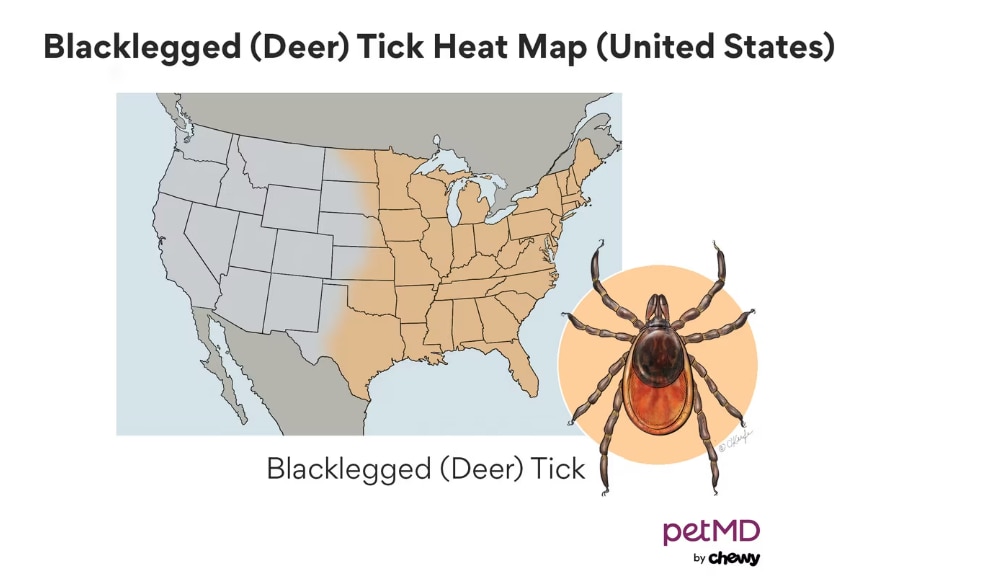
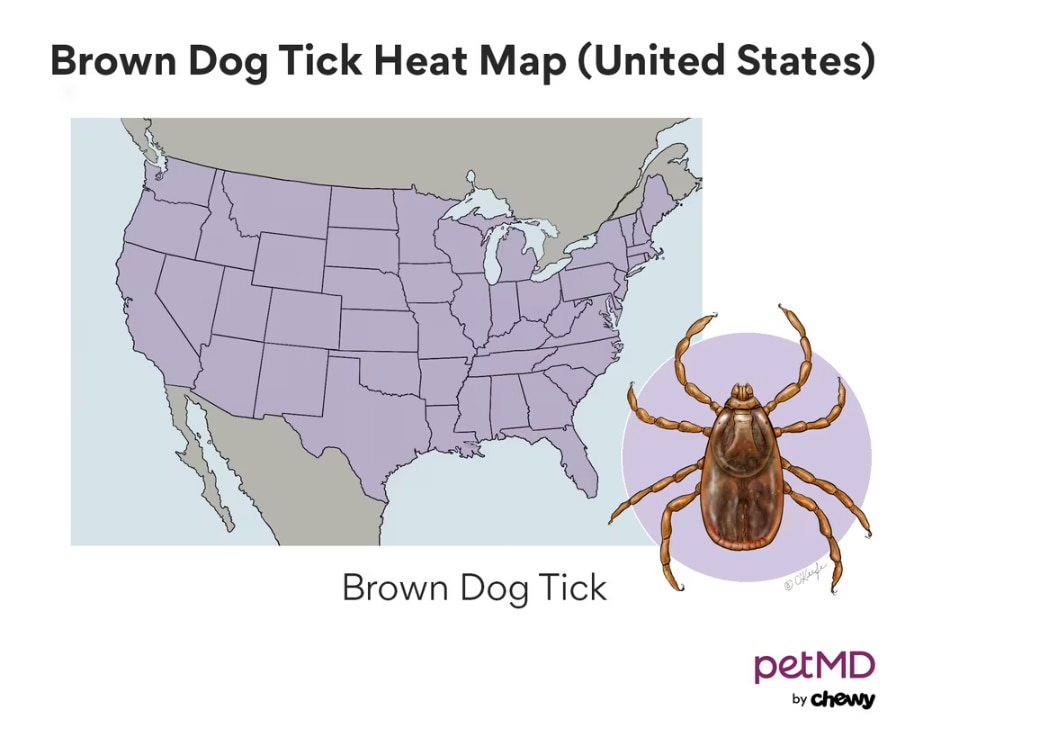
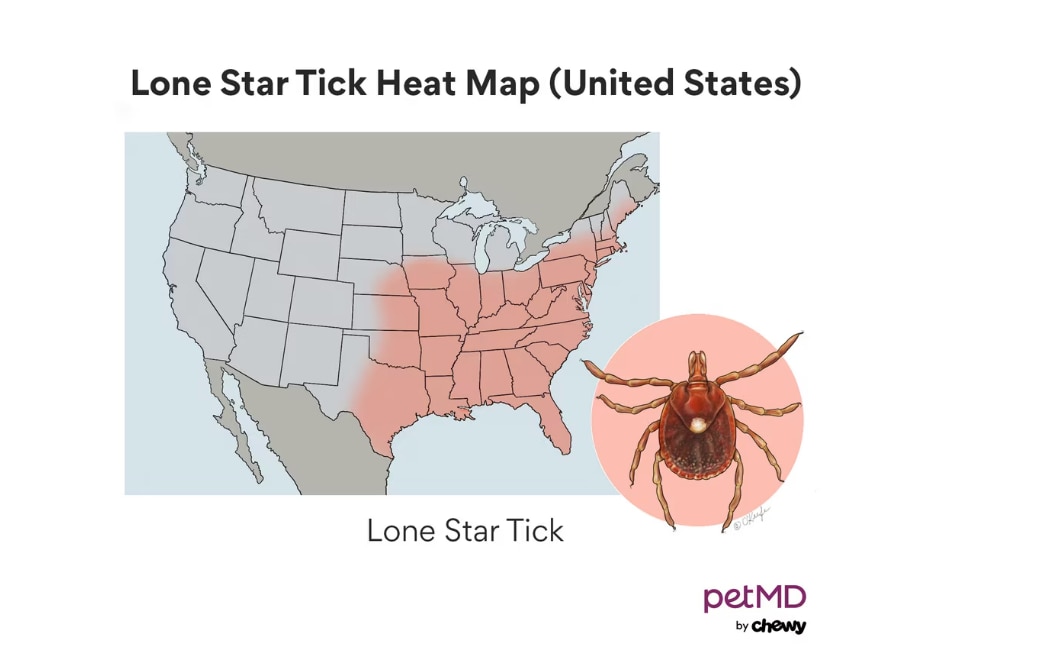
Different geographic locations have different local parasite populations, including fleas and ticks.
The Companion Animal Parasite Council is a helpful resource to identify the parasites in your area so you can make sure whichever flea and tick product you choose keeps your dog fully protected.

Life Stage
If your dog is still a puppy or is a small dog breed, you will need to consult your veterinarian to find an appropriate product for their weight and age. Most flea and tick preventives have a minimum age of 8 weeks, but always check the package insert for confirmation.
Some products, like Revolution Topical Solution for Kittens and Puppies, are formulated specifically for young puppies and can be used as early as 6 weeks of age.
MDR1 Gene
Some breeds (such as Collies, Australian Shepherds, and Shetland Sheepdogs) have a gene mutation called MDR1 that makes it harder for them to break down certain types of medications.
Many veterinarians recommend testing dogs for the MDR1 gene, especially affected breeds. That said, many manufacturers of parasite preventives have tested their products for safety on dogs with the MDR1 mutation and found they had no adverse effects. The following medications have been tested for safety in dogs with the MDR1 mutation with no adverse effects observed:
-
Nexgard
-
Nexgard Plus
-
Bravecto
-
Simparica
-
Simparica Trio
-
Advantage Multi
-
Revolution
Medical Conditions
Some classes of preventives, called isoxazolines, should be used with extreme caution in dogs with a history of seizures or neurologic disease, as neurologic side effects have been seen and these medications may make it easier for those particular dogs to have a breakthrough seizure.
No preventive should be used without thorough discussion with your veterinarian if:
-
Your dog has previously had an allergic reaction to the medication
-
Your dog is sick and/or underweight
-
Your dog is pregnant, nursing, or will be used for breeding in the future
Over-the-Counter vs. Prescription Flea and Tick Medicine
Some flea and tick preventives require a prescription, while others are available over the counter.
Over-the-Counter Flea and Tick Products
Over-the-counter (OTC) flea and tick preventives do not require a prescription from a veterinarian. They are typically available for purchase online and in many retail pet stores.
If you decide to use an OTC flea and tick preventive, always check in with your veterinarian to make sure it is a safe option for your pet.
Prescription Flea and Tick Products
Prescription flea and tick preventives require a prescription from your veterinarian, and they typically cost a little more than OTC options. Most veterinarians recommend prescription products, as they are typically more effective and safer for your dog.
Are Flea and Tick Preventives for Dogs Safe?
Flea and tick preventives for dogs are generally safe when used as directed and chosen appropriately for your dog’s age, size, and health status. FDA-approved preventives are tested for safety and widely recommended by veterinarians because the risks of fleas and tick-borne diseases are often greater than the risks of prevention.
That said, side effects can happen in some dogs, especially if the wrong product or dose is used. It’s always best to talk with your veterinarian to choose the safest and most effective option for your dog and never use products made for other animals or humans.
Popular Dog Flea and Tick Prevention Products
There are many flea and tick preventives that veterinarians trust, including chewables like Credelio Quattro, topicals like Frontline, and collars like Seresto. Our panel of vets has selected their picks for the best flea and tick medications for dogs in our Vet Verified product roundup. Talk to your vet to find the best fit for your dog and keep them flea-and-tick-free for life.
Treating Fleas on Dogs
To get rid of fleas on your dog, follow these steps:
-
Use a vet-recommended flea treatment to kill fleas and prevent more from hatching.
-
Use a flea comb to remove fleas and flea eggs.
-
Give your dog a flea bath with medicated shampoo or flea spray.
-
Treat your home for fleas.
How To Treat Your Home for Fleas
Once you’ve treated your dog for fleas, you may need to treat your home to fully eradicate the infestation. Follow these steps to treat your home for fleas:
-
Vacuum frequently, including floors, furniture, and baseboards.
-
Empty the vacuum in a sealed bag and dispose of it in an outdoor trash can.
-
Use a flea room spray.
-
Wash all pet bedding in hot water and dry on high heat.
How To Check Your Dog for Ticks
To check a dog for ticks, skim your hands over their body and through their fur feeling for bumps or irregularities. Pay close attention around the ears, between toes, under the tail, around eyelids, and in their underarm/groin areas.
How to Safely Remove Ticks From Dogs
You can remove a tick on your dog by grabbing it with tweezers as close to the skin as possible and firmly pulling outward. Do not twist or crush the tick. Alternatively, you can use a specialized tick removal tool, like the Tick Tornado, to assistin easily removing the tick.
Common Mistakes in Flea and Tick Prevention for Dogs
Even the best flea and tick prevention plan can fall short if it’s not used correctly. Small mistakes can leave your dog unprotected and at risk of infestation.
Here are some of the most common flea and tick prevention mistakes to avoid:
-
Missing doses
-
Stopping treatment in the winter
-
Mixing different preventive products throughout the year
-
Incorrectly applying topical products
-
Thinking flea and tick treatments aren’t species-specific
-
Not using an accurate dose
Dog Flea and Tick Prevention FAQs
What should I do if my dog has fleas?
If your dog has fleas, treat them with a vet-recommended flea medication as soon as possible. You can use a fine-toothed comb to remove adult fleas and bathe them with flea shampoo. Wash pet bedding in hot water and vacuum daily to remove eggs and flea larva.
What’s the worst month for fleas?
The worst time for fleas tends to be late summer to early fall, generally between August to October. However, the exact timing varies by region. Fleas can survive indoors and should be prevented year-round.
How long does flea and tick medicine last?
Most flea and tick prevention medications last for one month, though some brands of topical preventives can last up to three. Some flea and tick collars can last up to eight months.
Can my dog get fleas if they stay indoors?
Yes, dogs can get fleas even if they stay indoors because fleas can be carried inside on people, other pets, or items like clothing and furniture. Once inside, fleas can quickly infest your home and your dog, making prevention important year-round.
Do I need prevention if I don’t see fleas or ticks?
Yes, your dog still needs flea and tick prevention even if you don’t see any pests. Fleas and ticks can be present in the environment or on your dog before they’re visible, and prevention helps stop infestations and disease before they start.
Can fleas go away on their own?
No, fleas do not go away on their own. Without treatment, they continue to reproduce in your home and on your pet, often making the infestation worse over time.