Seborrhea in Dogs: Symptoms and Treatment



primeimages/iStock / Getty Images Plus via Getty Images
Seborrhea in dogs is a skin condition that can cause excessive flaking, scaling, itching, and a greasy or smelly coat. It occurs when the skin produces abnormal amounts of keratin and may be primary (genetic) or secondary to another health condition.
Key Takeaways
- Seborrhea in dogs affects keratin production in the skin, hair follicles, and nails.
- Symptoms include flaking, scaling, itching, and a greasy or smelly coat.
- Seborrhea can be primary, meaning it is genetic, or secondary to another health condition.
- Treatment depends on the underlying cause and may include medicated shampoos, ear cleaning, topical therapy, and oral medications.
- Most cases of seborrhea do not go away on their own and may require ongoing management.
What Is Seborrhea in Dogs?
Seborrhea in dogs is a skin condition that affects keratin production (keratinization) in the outer layer of the skin, hair follicles, and nails.
Keratin is a protein that gives skin and hair its form and creates a protective outer coating. In dogs with seborrhea, keratin is produced in abnormal amounts—either too much or not enough.
This abnormal keratinization can result in a coat that's dry, lackluster, or greasy.
Types of Seborrhea in Dogs
There are two types of seborrhea in dogs: primary seborrhea and secondary seborrhea.
- Primary seborrhea in dogs is a genetic disease that causes abnormal keratin production.
- American Cocker Spaniels, West Highland White Terriers, English Springer Spaniels, and Basset Hounds are the most common breeds to have primary seborrhea, but any dog can have the condition.
- Secondary seborrhea occurs when an underlying health issue causes abnormal keratin production. These health issues can include:
What Are the Symptoms of Seborrhea in Dogs?
Common symptoms of seborrhea in dogs include a dry or dull coat, dandruff, greasy or oily skin, skin lesions, itching, excess earwax or debris, and a strong skin odor.
Signs of seborrhea in dogs may include:
- Very dry, dull coat
- Dandruff
- Greasy, oily skin that smells bad
- Crusted, plaque-like skin lesions that are rough and scaly
- Itching that ranges from mild to severe
- Large amounts of earwax and ear debris
Commonly affected areas: Seborrhea can affect the skin throughout the body, but symptoms are usually worse in the skin folds between the toes, in the armpits, on the belly and perineum (the area under a dog's tail), and at the bottom of the neck.
Dogs with many skin folds, such as Basset Hounds, usually have more affected skin within those folds.
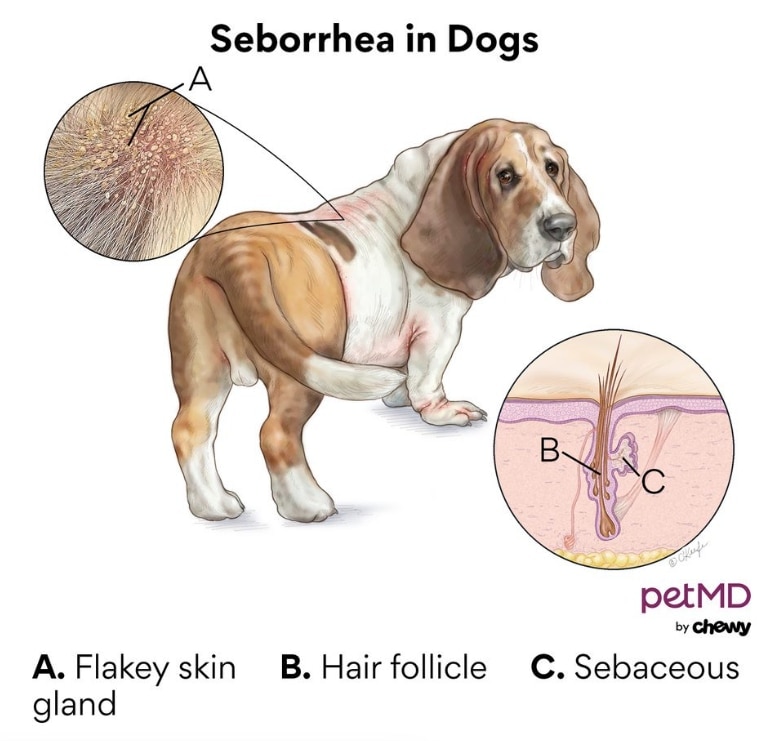
Download the medical illustration of seborrhea in dogs.
Seborrhea can also cause a strong skin odor that has been compared to the smell of "corn chips." This odor comes from normal yeast and bacteria multiplying on the skin.
What Causes Seborrhea in Dogs?
The cause of seborrhea in dogs depends on whether it is primary or secondary. Primary seborrhea is genetic, while secondary seborrhea is caused by an underlying health condition.
Primary seborrhea is a congenital, genetic disease that typically starts at a young age and gets worse as a dog gets older. Breeds most affected include:
- West Highland White Terriers
- Basset Hounds
- American Cocker Spaniels
- English Springer Spaniels
Secondary seborrhea can be caused by diseases and other health issues, including:
- Skin allergies to fleas, food, and environmental allergens
- Hypothyroidism, caused by an underactive thyroid gland
- Cushing's disease, caused by an overactive adrenal gland
- Diabetes mellitus
- Mites and lice
- Autoimmune diseases such as pemphigus foliaceus, sebaceous adenitis, and lupus erythematosus
- Cutaneous epitheliotropic lymphoma, a type of cancer
- Vitamin deficiencies such as zinc-responsive dermatosis and vitamin A-responsive dermatosis
How Is Seborrhea in Dogs Diagnosed?
Veterinarians diagnose seborrhea in dogs with a physical examination and testing to help determine the underlying cause of the skin condition.
Your veterinarian will examine your dog's skin and look for other symptoms. They will also ask how long the condition has been present, whether your dog has been scratching, and whether there have been any changes in food or water intake.
Diagnostic tests may include:
- Skin scraping to test for mites and lice
- Impression cytology of skin and ear debris to test for yeast or bacterial infections that can look like seborrhea, such as Malassezia yeast
- Blood work
- Biopsy to look for autoimmune disease or cancer
How Is Seborrhea in Dogs Treated?
Treatment for seborrhea in dogs focuses on treating the underlying condition while also managing the seborrhea itself with treatments such as medicated bathing and ear care.
Based on your dog's test results, your veterinarian will determine what is causing the seborrhea and recommend treatment.
Treating the Underlying Cause
- Hypothyroidism: Dogs with hypothyroidism are treated with hormone replacement using an oral medication called levothyroxine, which they will take for the rest of their life.
- Cushing's disease: Treatment involves lifelong medication called Vetoryl.
- Diabetes: Treatment requires daily insulin injections.
- Cancer or autoimmune disease: If a biopsy shows autoimmune disease or cancer, your dog will be started on medication to manage the disease, or your veterinarian may refer you to a specialist.
- Lice or mites: If a skin scraping identifies lice or mites, your veterinarian will prescribe medication to kill the parasites.
- Fleas: If your dog has fleas, a monthly flea preventative will help curb flea allergies that can cause or worsen seborrhea.
- Vitamin deficiency: If your veterinarian suspects vitamin A-responsive dermatitis or zinc-responsive dermatitis, they will recommend additional vitamins in your dog's diet.
- Food allergy: If your veterinarian suspects a primary food allergy, they may recommend a hypoallergenic food trial.
- Infection: If an infection develops because of seborrhea, it must also be treated. Your dog may require a course of oral antibiotics (cephalosporins) and/or antifungals such as itraconazole.
Treating Seborrhea Itself
Medicated bathing: Dogs with seborrhea need frequent baths with anti-seborrheic shampoos, typically every two or three days to start. These shampoos typically contain coal tar and salicylic acid.
Frequent bathing continues for two to three weeks or longer until the skin improves. The goal is to remove excess keratin.
Depending on your dog's response to treatment, bathing may decrease to every one to two weeks or remain every two to three days.
Ear care: Your dog's ears will also need to be cleaned with a medicated ear cleaner every two to three days. If an ear infection is present, your veterinarian will prescribe ear medication.
Additional medication: Your dog may also be started on prednisone to decrease inflammation and debris buildup.
Veterinary rechecks: Regular rechecks with your veterinarian, typically every one to three weeks, are important for monitoring how your dog responds to treatment.
Recovery and Management of Seborrhea in Dogs
Signs of seborrhea in dogs can take several weeks to resolve, and long-term management depends on the underlying cause. The disease causing secondary seborrhea may need to be managed for life.
Once seborrhea is present, abnormal keratin placement in the skin will continue to occur.
Long-term management may include:
- Using anti-seborrheic shampoos on a schedule recommended by your veterinarian to help decrease keratin buildup and prevent infections
- Cleaning your dog's ears with an ear cleaner on a veterinarian-recommended schedule
- Using soothing hot spot ointments, such as Silver Honey® Ointment Spay, if recommended by your veterinarian
- Using additional topical wipes or sprays if recommended by your veterinarian
Management of seborrhea often requires a lifelong routine of bathing and ear cleaning, but with consistent treatment, your dog can enjoy a good quality of life.
If your dog becomes itchier or develops skin lesions, schedule an appointment with your veterinarian as soon as possible.
How To Prevent Seborrhea in Dogs
Some cases of seborrhea in dogs cannot be prevented, particularly when a dog has a familial history and genetic predisposition to the condition.
To help support your dog's skin and coat health:
- Keep your dog at a healthy weight and maintain a healthy lifestyle.
- Feed an AAFCO-approved diet that provides vitamins, minerals, and other nutrients to help maintain your dog's health.
- Diets or supplements containing omega-3 fatty acids (fish oils) can help promote a healthy coat and skin.
- Bathe your dog routinely to help keep their coat and skin healthy, especially if they have thick, long hair and are prone to conditions such as seborrhea.
- Take your dog to the veterinarian for routine annual checkups and at the earliest sign of skin disease.
Dogs with a familial history of seborrhea may be genetically predisposed to the condition, and in these cases, there is nothing you can do to prevent it.
Seborrhea in Dogs FAQs
What home remedies can treat seborrhea in dogs?
Medicated shampoos and mousses may be used for dogs with seborrhea.
Do not apply home remedies such as coconut oil or apple cider vinegar directly to your dog's skin, as these can make skin disease worse.
Is seborrhea in dogs contagious?
No. Seborrhea in dogs is not contagious.
Can seborrhea in dogs go away on its own?
Most cases of seborrhea in dogs will not go away on their own.
Mild cases often require topical therapy, while more severe cases may also require oral medication.
What food is good for dogs with seborrhea?
The appropriate diet for a dog with seborrhea depends on the underlying cause. Your veterinarian may recommend a special diet.
Mild cases may benefit from a sensitive-skin diet, while dogs with a suspected food allergy may benefit from a prescription novel-protein or hydrolyzed diet.
Always speak with your veterinarian before changing your dog's diet.
What dog breeds are prone to seborrhea?
Primary seborrhea is most common in American Cocker Spaniels, West Highland White Terriers, English Springer Spaniels, and Basset Hounds, although any dog can develop the condition.