Hookworms in Dogs: Symptoms, Treatment, and How To Prevent Them




SeventyFour/iStock / Getty Images Plus via Getty Images
Hookworms in dogs are a common type of intestinal worm that can affect dogs of all ages. These parasites feed on blood and can cause anemia, diarrhea, and weakness.
Because symptoms can start subtly and worsen quickly, particularly in puppies, it’s important to recognize the early warning signs and seek prompt veterinary care. Understanding how dogs get hookworms, how they’re treated, and how to prevent them can make a critical difference in your dog’s health.
Key Takeaways
- Hookworms are common intestinal parasites found throughout the United States. They especially thrive in warm, moderately moist soil.
- Hookworms are so small that you typically do not see them in your pup’s stool, which allows them to easily go undetected.
- Symptoms may include no visible signs or, in severe cases, dark, tarry diarrhea, weight loss, pale gums, weakness, and anemia due to blood loss.
- Treatment of hookworms in dogs requires that you give your pet a deworming medication on a strict schedule.
- Prevention includes regular deworming, routine stool testing, keeping a clean environment, and year-round parasite prevention prescribed by your veterinarian.
What Are Hookworms in Dogs?
Hookworms are an intestinal worm that can affect both dogs and people.
They get their name from their hook-like mouthparts, which they attach to the lining of your dog’s small intestine, and from their bloodsucking behavior.
These parasites are so small (about 1/8 inch long) that you typically do not see them in your dog’s stool, which allows hookworms to easily go undetected.
Symptoms of hookworms in puppies and dogs can vary from no signs of infection to severe illness. If your pup is feeling well, hookworms are generally not an urgent issue; however, hookworms can be deadly in puppies due to the blood loss that results from them.
Types of Hookworms in Dogs
The most common type of hookworm in dogs and puppies is Ancylostoma. A less common hookworm, Uncinaria, is generally not as harmful to dogs.
Symptoms of Hookworms in Dogs
Many hookworm-infected puppies and dogs have no signs of illness but continue to spread eggs and larvae into the environment.
Symptoms of hookworms in dogs can include:
-
General unhealthy appearance, including dull coat
-
Weakness
-
Low blood count (anemia) due to blood loss
-
Coughing or trouble breathing (occurs when the larvae migrate to the lungs)
-
Dermatitis (irritated, red, itchy skin) of the webbing between the toes (occurs when the larvae infect the paws)
Hookworms are considered a medical emergency if your pup is showing severe signs of illness due to blood loss and malnutrition.
How Do Dogs Get Hookworms?
Dogs can become infected with hookworms in several ways:
-
Ingesting larvae from a contaminated environment
-
Eating wildlife infected with worms or eggs
-
Coming into contact with contaminated soil (since larvae can penetrate the skin)
-
Ingesting larvae while nursing from their mother
If you are caring for a pregnant dog or nursing mother, ask your vet about deworming her to stay ahead of transmission to the puppies.
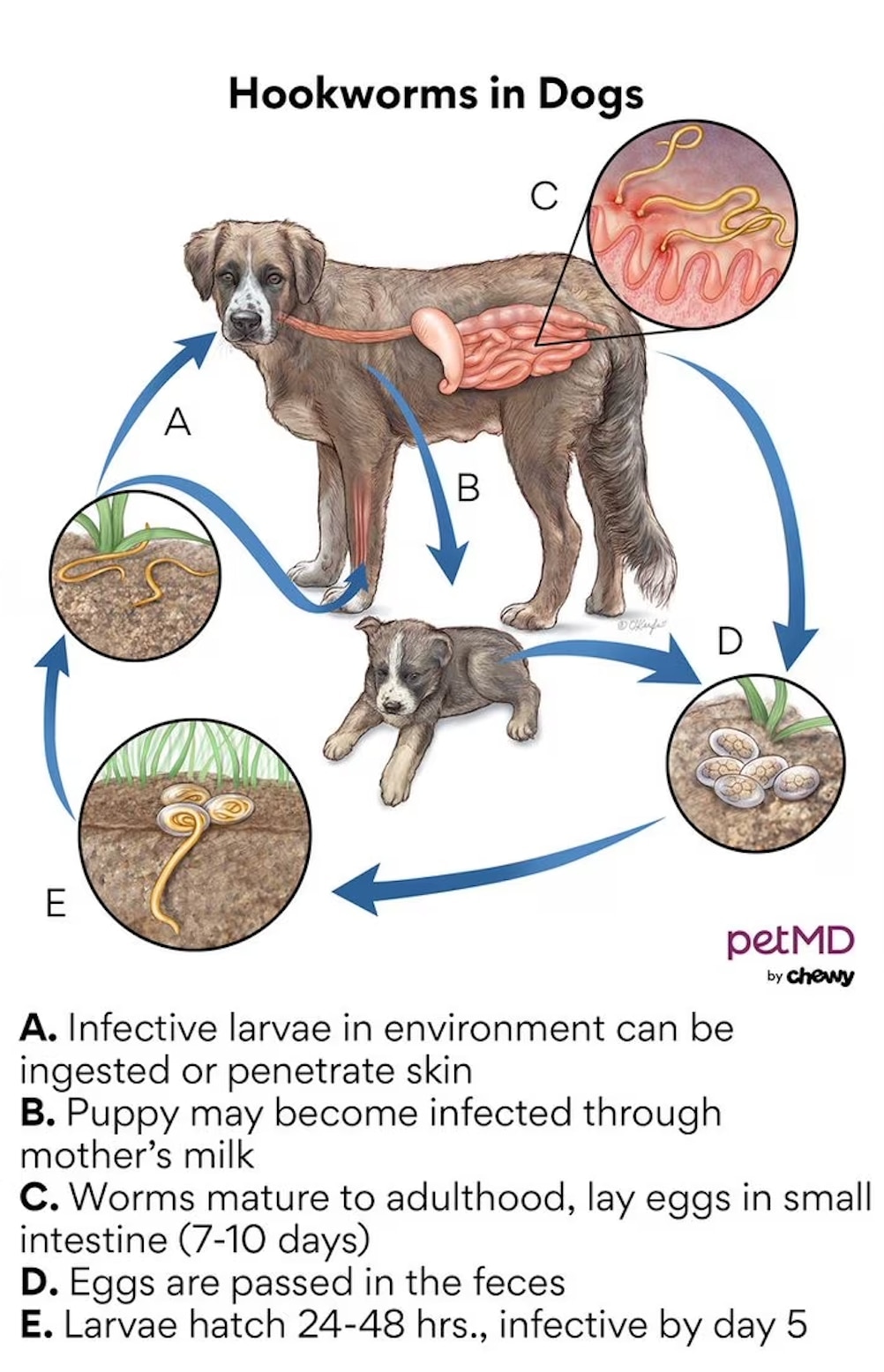
Click here to download this medical illustration.
Infection with hookworms can occur in all dogs, young and adult. Infection rates are typically higher in:
-
Dogs kept outdoors
-
Dogs who frequent dog parks
-
Stray dogs
-
Dogs who are not on monthly internal parasite preventative
-
Dogs kept in crowded, unsanitary environments
Hookworms are found throughout the United States, and they especially thrive in warm, moderately moist soil.
They can survive in soil for several months and are usually killed by freezing temperatures.
How Veterinarians Diagnose Hookworms in Dogs
To test for hookworms in dogs, your vet needs a fresh stool sample from your pup that you bring from home, or they can get a sample during a physical examination of your dog.
Your vet might then order one or both tests:
-
Fecal examination (also known as fecal centrifugation and flotation): This test detects microscopic parasite eggs and can be performed in the vet hospital or sent out to a reference laboratory.
-
Fecal antigen test: This test detects certain proteins from intestinal parasites and is sent out to a reference laboratory.
Even if you highly suspect hookworms in your pup, your veterinarian will likely want to run lab tests to confirm that the parasite is correctly identified and to check the number of eggs in the sample to assess your dog’s response to treatment.
The tests will also screen for other worms, since a dog can have several different types of intestinal parasites at one time.
Treatment of Hookworms in Dogs
Treatment of hookworms in dogs requires that you give your pet a deworming medication on a strict schedule.
To treat hookworms, your vet might prescribe one or more of these treatments:
-
Broad-spectrum deworming medication including pyrantel (one of the active ingredients in Drontal Plus) or fenbendazole (found in Panacur), among others
-
Parasite preventives containing a combination of deworming medications, including NexGard PLUS, which are chewable tablets formulated for dogs as young as 8 weeks of age and weighing 4 pounds or more.
Treatment for your pup can vary, depending on:
-
The severity of your dog’s infection
-
Your dog’s health status
-
The medication dosage
-
The formulation and frequency of treatment your veterinarian prescribes
In severely affected puppies and dogs, deworming treatment is combined with hospitalization and supportive care, including electrolyte and fluid therapy; a high-quality, high-protein diet; blood transfusions if needed; and additional medications.
It’s important to carefully follow the directions provided by your vet and to return for follow-up visits and stool tests to ensure the treatment is working for your pooch.
Recovery and Management of Hookworms in Dogs
Puppies and dogs who are mildly infected with hookworms can completely recover within a few weeks at home. Pups who are severely ill might be hospitalized for several days and require more intensive treatment.
If your pup has diarrhea or low appetite, your vet might recommend a gastrointestinal probiotic, such as FortiFlora or Proviable-DC, to aid digestion and provide immune system support.
Prevention of Hookworms in Dogs
The best prevention for hookworms in dogs includes:
-
Regular wellness visits with your veterinarian
-
Regular deworming
-
Prompt removal of dog poop from your home and yard
-
Stool testing, needed twice a year for adult dogs (depending on health and lifestyle) and four times a year for puppies and newly adopted dogs
-
Monthly parasite prevention year-round for life, such as NexGard PLUS chewable tablets, which not only protect dogs against hookworms, but also fleas, ticks, roundworms (another type of intestinal worm), and heartworm disease.
-
Treatment of pregnant and nursing dogs with deworming medication prescribed by your vet to reduce the risk of transmission from mother to puppies
Hookworms in Dogs FAQs
How contagious are hookworms from dog to human?
Hookworms are contagious from dogs to people. People can become infected when walking barefoot on soil or sand where dogs have been allowed to defecate.
How long does it take to get rid of hookworms in dogs?
Puppies and dogs who are mildly infected with hookworms can completely recover within a few weeks at home on a routine deworming schedule.
Pups who are severely infected might have a longer and more involved recovery.
Do I need to clean my house if my dog has hookworms?
Yes. To prevent hookworm eggs from contaminating your home, promptly pick up all stool immediately after your dog defecates.
Clean your home completely by washing all bedding (including your pup’s) and toys, vacuuming floors, and disinfecting surfaces. All pets in the house need to be on monthly year-round parasite preventative and routine deworming.
References
Dinulos J. Cutaneous Larva Migrans. Merck Manual. Revised October 2023.
Hookworms. Companion Animal Parasite Council. Updated March 29, 2023.
Stafford K, Kollasch TM, Duncan KT, et al. Detection of gastrointestinal parasitism at recreational canine sites in the USA: the DOGPARCS study. Parasites and Vectors. 2020;13: 275.
Thornton K. Hookworms are becoming resistant to treatment – what now? Veterinary Practice News. Published December 22, 2022.