Dachshund


Istock/slowmotiongliWhat
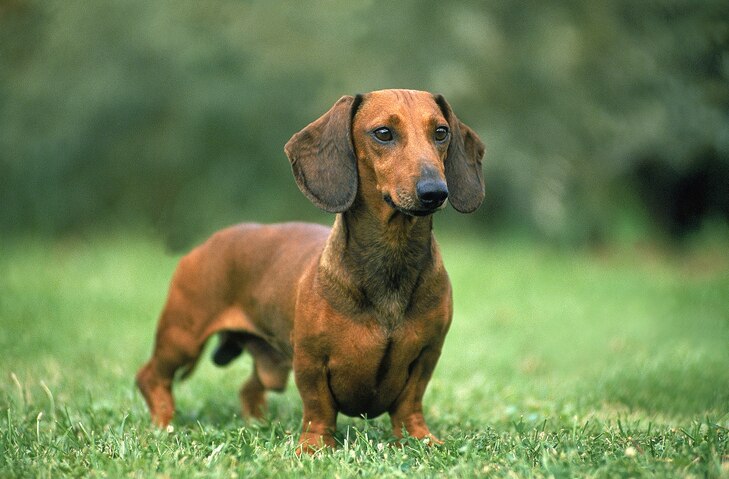
Famously nicknamed the “hot dog” or “wiener dog,” Dachshunds (or Doxies, for short) are known for their long silhouette, short and muscular legs, brave and energetic personality, and for always being on the lookout.
“Dachshund” comes from the German words for badger (dachs) and dog (hund), as these dogs were originally bred in 18th-century Germany to hunt badgers.
Dachshunds were bred to be independent hunters of dangerous prey. Because of this, Dachshund dogs can be brave to the point of carelessness and a bit tenacious, but their charming nature and famous long-and-low body make them one of the most popular dog breeds in the U.S.
Caring for a Dachshund Dog
A Dachshund (pronounced “dakk-snd”) can be willful, headstrong, playful, and mischievous. But the breed is also smart and attentive.
Dachshunds come in a wide variety of colors, patterns, and coat types. There are also two Dachshund sizes:
-
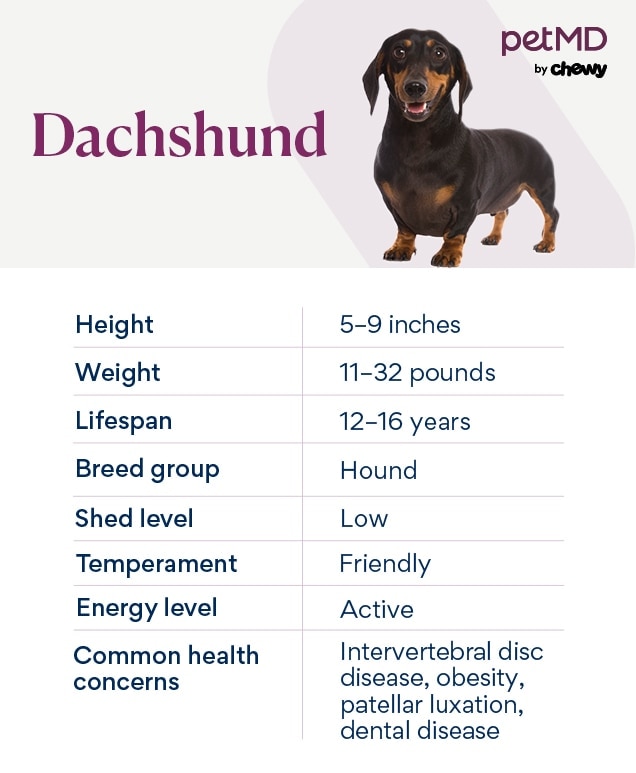
Standard Dachshunds weigh 16–32 pounds and stand 8–9 inches tall
-
Miniature Dachshunds are under 11 pounds and stand just 5–6 inches tall
Although they are small dogs, Dachshunds need regular exercise to stay fit and build strong muscles to support and protect their long back, which is vulnerable to injury.
Dachshunds are not built for extensive jumping, twisting, or anything that puts strain on their back. To help keep your Dachshund’s back healthy and prevent injuries, try to limit their jumping by installing pet stairs or ramps near furniture and beds.
Keeping your Dachshund at a healthy weight also helps minimize the risk of a back injury.
Dachshund Health Issues
The typical Dachshund lifespan is 12–16 years, about average for a smaller dog breed. But the breed is, unfortunately, susceptible to several health conditions throughout their life.
Intervertebral Disc Disease
Intervertebral disc disease (IVDD) in Dachshunds is caused by a bulging or slipped disc within the vertebral column of the spine. As many as 25% of Dachshunds develop IVDD in their lifetime, and it can lead to permanent paralysis if not treated quickly.
Bring your Dachshund to the vet if you notice a change in the way they move or any of the following symptoms:
-
Back pain
-
Trouble walking
-
Limping
-
Holding head/neck down
-
Dragging paws
-
Scuffed toenails
-
Problems urinating or defecating
Depending on the severity of the disease, treatment with anti-inflammatory and pain medications may be recommended, as well as muscle relaxants and strict cage rest (no playing, running, or jumping—only short, leashed walks to go to the bathroom are allowed).
Surgery or other treatments for more severe IVDD are often necessary to help dogs regain use of their legs and other functions affected by a slipped disc. Some dogs never recover fully despite treatment.
Pull quote: The number one health issue in a Dachshund is back ailments due to the dog’s long spine, muscular and bowed legs, and low-to-the-ground stature.
Obesity
Dachshunds are predisposed to obesity because of their small size and need to restrict some forms of exercise.
Dachshunds are also prone to disorders that impact their mobility, such as IVDD and orthopedic conditions. These conditions make it harder for your dog to move, which can lead to weight gain.
It’s important to have your veterinarian examine and weigh your Dachshund at least once a year to ensure they remain healthy.
You can schedule an appointment with your veterinarian to find out how many calories your dog needs each day and to create a weight loss plan for your Dachshund, if needed.
Luxating Patella
A luxating patella is common in small dogs, including Dachshunds. This is caused by the kneecap slipping out of its normal position, and the condition often occurs simultaneously in both hind legs.
You may notice your Dachshund limping on their hind legs, or you may see a “skip” or “bunny hop” to their gait when they walk. Depending on the severity, some dogs do not require any treatment, but others may need anti-inflammatory and pain medications or even surgery.
Giving your dog joint protection supplements and keeping them at a healthy weight may help prevent secondary issues.
Deafness
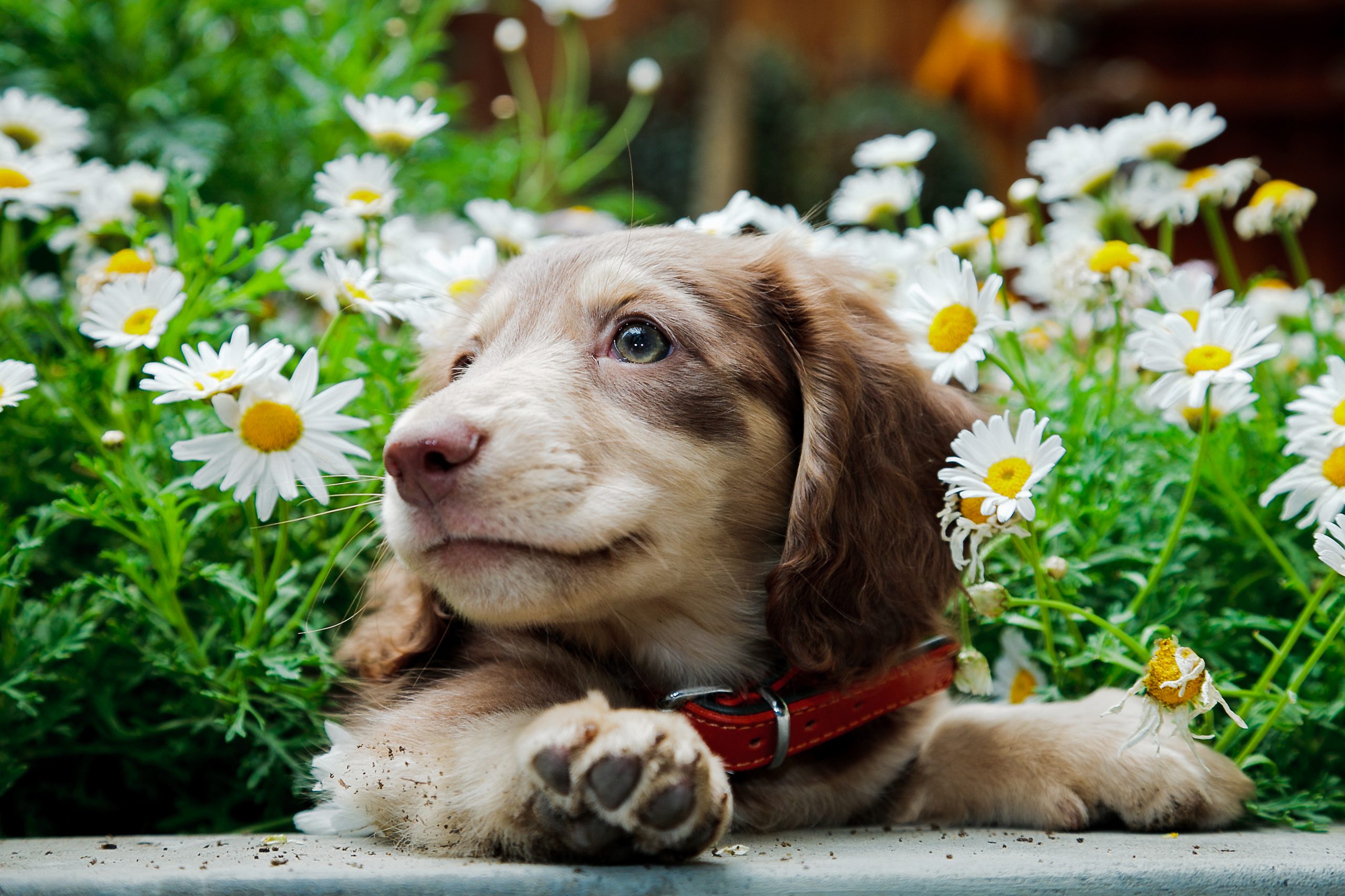
Dapple Dachshund puppies (dogs that have a coat mottled or spotted with patches of white and color) may be born deaf, especially if both of their parents had dappled coats as well. While there is no cure for this, deaf dogs can live long, healthy lives.
Dental Disease
Small dogs such as Dachshunds are more prone to periodontal disease, in which plaque and tartar build up on a dog’s teeth, leading to gum inflammation, bacterial infections, and tooth loss.
The best way to prevent this is to brush your dog’s teeth daily. Your veterinarian can recommend the best dog toothpastes and toothbrushes, along with other oral health products like dental chews and water additives.
Pet parents must also have their Dachshund’s teeth professionally cleaned on a schedule recommended by their veterinarian.
Epilepsy
Idiopathic epilepsy is the presence of seizures without a known cause. The seizures commonly begin when a dog is young, between 1 and 5 years old, and this condition is thought to be genetic.
There are two main kinds of seizures in Dachshunds: generalized and focal.
-
Generalized seizures affect the entire body. Your dog is not aware of their surroundings, often experiences convulsions, and may urinate or defecate during the seizure.
-
Focal seizures are more subtle; they can cause chewing movements or twitching of the face or a limb, for example.
If you notice any seizure activity or suspect your Dachshund has had a seizure, have them examined by a veterinarian as soon as possible.
The vet will perform a complete physical and neurologic examination, run blood work, do urine testing, and possibly recommend an X-ray or ultrasound to rule out other possible causes of seizures, such as toxins.
Anti-convulsant medications can control these types of seizures in dogs.
Eye Problems
Eye problems such as cataracts, glaucoma, and progressive retinal atrophy (PRA) are all common in Dachshunds and can cause blindness in your dog.
Common symptoms of eye problems are:
-
Red, swollen, or irritated eyes (with or without discharge)
-
Bumping into things
-
Anxiety or hesitation in new places
-
Unwillingness to go up or down stairs or climb on or off furniture
-
Pawing at face
-
Confused, dazed, or startled behavior
PRA is not treatable and affected dogs will lose their vision. Cataracts are treated with surgery, and glaucoma can be managed with medications, though surgery is sometimes needed.
Your veterinarian can monitor for these eye issues, and Dachshund breeders can screen for them.
Nasal Disease
Dachshunds are dolichocephalic (long-faced) dogs. This type of anatomy puts them at increased risk of fungal, bacterial, or other infections in their nasal and sinus cavities.
Make an appointment with your veterinarian if you notice your dog:
-
Rubbing their nose
What To Feed a Dachshund

Dachshunds require a high-quality, age-appropriate diet (puppy, adult, or senior) to meet their nutritional needs.
Feed your Dachshund an Association of American Feed Control Officials (AAFCO)-compliant diet, which ensures that ingredients in the food meet established standards. Your vet can recommend the best dog food for your pup’s age, health, and lifestyle.
Some brands, like Royal Canin, have breed-specific dog food made just for Dachshunds. Ask your vet if this is a good fit for your pup.
Your vet might also recommend a dental diet formulated to reduce the amount of plaque and tartar that accumulates on your Dachshund’s teeth.
How To Feed a Dachshund
In general, Dachshund puppies should be fed three to four times a day, while adult Dachshunds should eat twice daily.
If your pup eats too quickly and gets an upset stomach, use slow feeder bowls to slow them down.
How Much Should You Feed a Dachshund?
How much you feed your dog is determined by the specific food your Dachshund eats and your pup’s health and activity level. Your veterinarian and the feeding instructions on the bag of food will help you find the right amount to keep your Dachshund at a healthy weight.
Do not overfeed your Dachshund. Overweight Dachshund dogs are at a higher risk for back injuries and other diseases.
Nutritional Tips for a Dachshund
Dogs eating an AAFCO-compliant diet will receive all needed nutrition from their food. But your vet might recommend dietary supplements for your Dachshund to support your dog’s health, including:
-
Glucosamine, chondroitin, and methylsulfonylmethane (MSM) supplements to promote joint and back health.
-
Omega-3 fatty acids (fish oil), which have anti-inflammatory properties and promote healthy joints, skin, and coat.
-
Certain antioxidants and vitamins may support eye health.
Behavior and Training Tips for a Dachshund
Dachshund Personality and Temperament
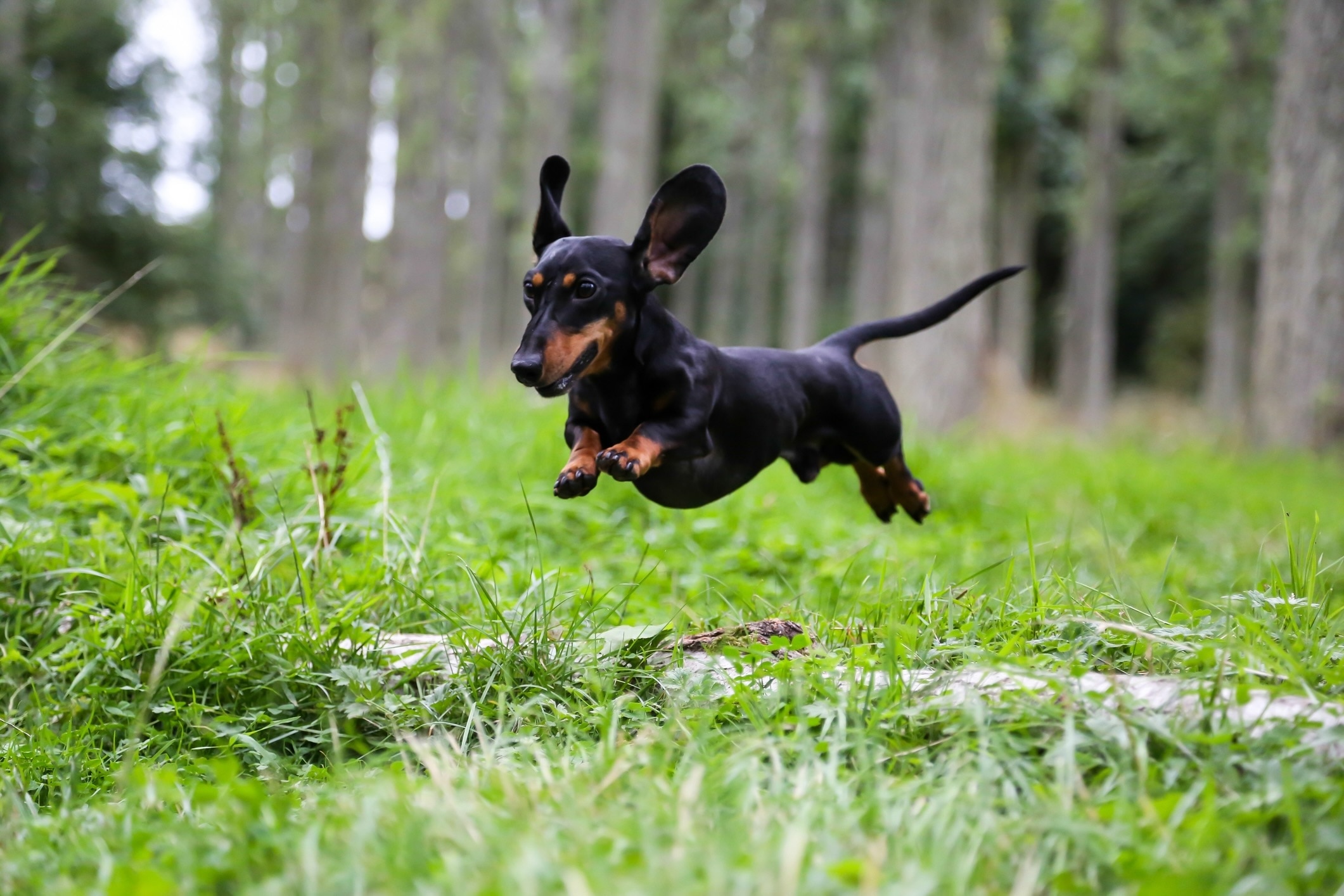
Dachshunds are playful and friendly dogs that can make great pets for a first-time dog parent. They love mental challenges like puzzle games or scent-tracking sports. However, be careful with them during high-energy activities to avoid back injuries.
The Dachshund’s spunky temperament also means playtime with children should be supervised, as they may play too rough for young kids. Children must also be taught how to interact safely with dogs.
Even though they are small, Dachshunds need regular exercise to stay fit and build strong muscles to support and protect their back. They should lead active lifestyles and have multiple daily walks, playtime, and activities to mentally stimulate them throughout the day.
Dachshund Behavior
Dachshunds are good dogs for apartments and small houses, but they do tend to bark a lot. Training can help manage their barking habits.
Thanks to their history as hunting dogs, Dachshunds have an excellent sense of smell and a strong prey drive. Because of this, they might not do well in homes with smaller animals that they might see as something to chase after.
Dachshund dogs also like to dig, which may cause damage to your plants and yard. Keep that in mind and provide alternative activities for your dog.
Dachshund Training
Dachshunds are smart dogs, but they are also independent and often willful, so they can be a challenge to train.
Always encourage your dog with positive reinforcement during training and keep sessions short. If they lose patience and get distracted by a sound or smell, take a break and continue their training later.
Dachshund puppies must be socialized consistently when young so they learn to be confident, good-mannered dogs that don’t bark or chase inappropriately.
Fun Activities for a Dachshund
-
Puzzle toys
-
Hide-and-seek with treats
-
Walks
Dachshund Grooming Guide
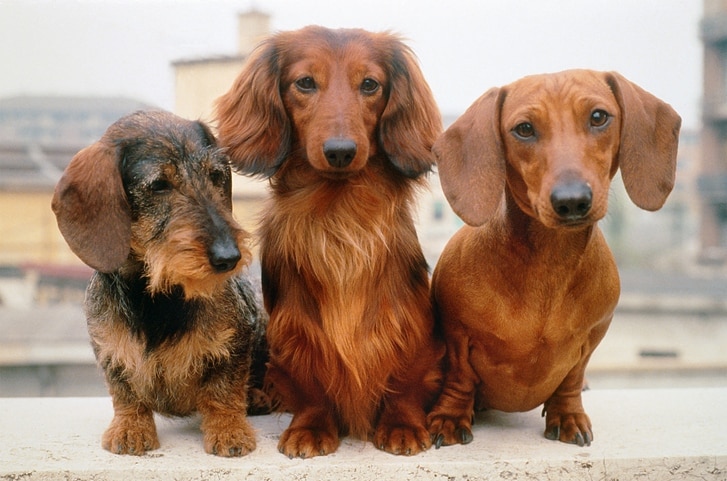
Dachshunds can have three different coat types:
-
Longhaired Dachshunds have a thick coat that’s typically slightly wavy, and the hair is longer on their neck, chest, and underside.
-
Smooth Dachshunds have a short, smooth, and shiny coat.
-
Wirehaired Dachshunds have a coarse outer coat with a softer undercoat.
All Dachshunds shed regularly throughout the year, though not as intensely as some other breeds.
Skin Care
Healthy Dachshunds don’t need to be bathed often. Bathing once every few months is usually sufficient, but ask your vet for the best guidance.
Coat Care
Grooming varies depending on your Dachshund dog’s coat type.
- Smooth-coated Dachshunds require the least maintenance—they can simply be wiped down with a grooming glove to remove loose hair and with a towel to make their coat shine.
- Longhaired Dachshunds require frequent brushing, depending on the coat’s thickness, and they are prone to getting mats or tangles. These fluffy Dachshunds must be brushed out completely at least several times a week if not daily. A slicker brush detangles the hair, and a bristle brush keeps the coat shiny.
-
Wirehaired Dachshunds can be plucked or hand-stripped a few times a year to help maintain their coat’s rough texture. Aside from that ritual, they are easy to maintain with an occasional trim of their beard and eyebrows. Brushing their coat several times a week is needed as well; slicker brushes and bristle brushes are also good picks for wirehaired dogs.
No matter their coat type, a Dachshund’s belly might need more frequent brushing because they’re so close to the ground and can easily pick up debris.
Eye Care
All dogs have a natural eye pigment, called porphyrin, in their tears that turns a brown-reddish color. Use a special eye wipe—such as Angels’ Eyes products—to clean any tear stains your Dachshund develops.
While some tear staining is normal, talk to your veterinarian if you notice any changes in your dog’s eyes or vision.
Ear Care
Ear infections are common in Dachshund dogs. Moisture can be trapped inside the ear, causing bacteria and/or yeast to overpopulate, leading to an ear infection. Allergies also increase a dog's risk for ear infections.
A general guideline for ear care is to check your dog’s ears for problems at least once a month. You can look at their ears when you are bathing them, brushing them, or trimming their nails.
Ask your vet how to clean your dog’s ears and which ear-cleaning products to use.
Considerations for Pet Parents
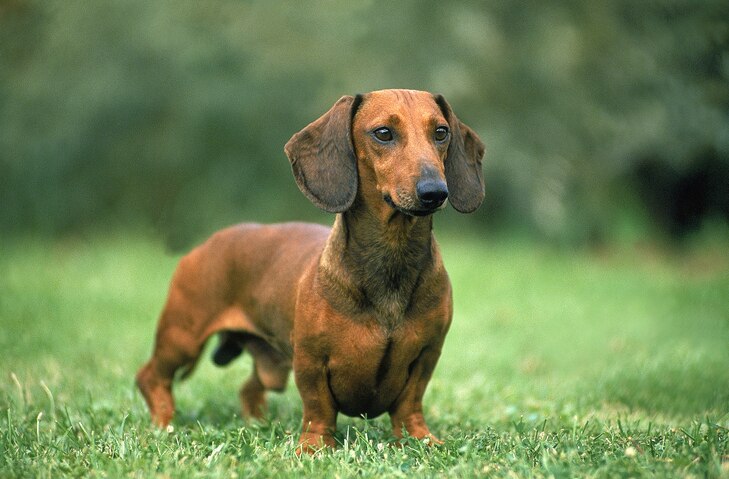
Dachshunds can be great companion pets for people in smaller homes or apartments—as long as they get enough stimulation through walks and play every day. However, they are quite vocal dogs, so you will need to put in some training to redirect barking behaviors.
This breed is also very susceptible to back injuries, so any prospective owners will need to be prepared to take precautions to help support their Dachshund's back health. It’s extremely important that Dachshunds do not become obese, which can make them more at risk for back injuries.
This is a rambunctious and smart dog breed, so mental stimulation and consistent training are important to help build good behavior. Make sure you have time to dedicate yourself to this before bringing home a Dachshund puppy.
Dachshund FAQs
Is a Dachshund a good family dog?
Dachshunds can make great dogs for the right family. They need a family with older children and that has the time to keep a dog active, stimulated, and trained.
How long do Dachshunds live?
The typical Dachshund life expectancy is 12–16 years.
Do Dachshunds shed?
Yes, Dachshunds shed moderately year-round. Routine grooming can help reduce the amount of fur that ends up in your home.
Are Dachshunds smart dogs?
Yes, Dachshunds are undeniably smart and are great at solving problems. Most love puzzles and other interactive toys to play with every day.
How much does a Dachshund cost?
The average Dachshund puppy price ranges from $500 to more than $2,000, depending on the dog’s markings/coat, breeder, pedigree papers, and health screenings. Dachshund rescue organizations and local shelters can also help you find Dachshunds for adoption.
How do you pronounce 'Dachshund'?
The correct Dachshund pronunciation is “daak-snd.”
Should I purchase a teacup Dachshund?
No, do not work with a breeder that advertises teacup Dachshunds. Teacup dogs are typically bred to be as small as possible, with few (if any) considerations to the dog’s health. Mini Dachshunds and even standard-size Dachshunds are already quite small.