Bulldog (English Bulldog)


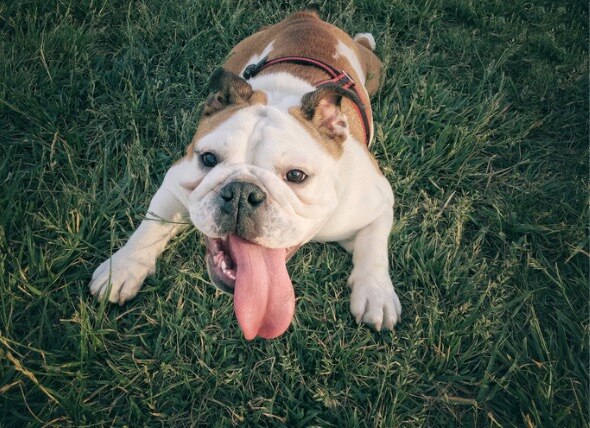
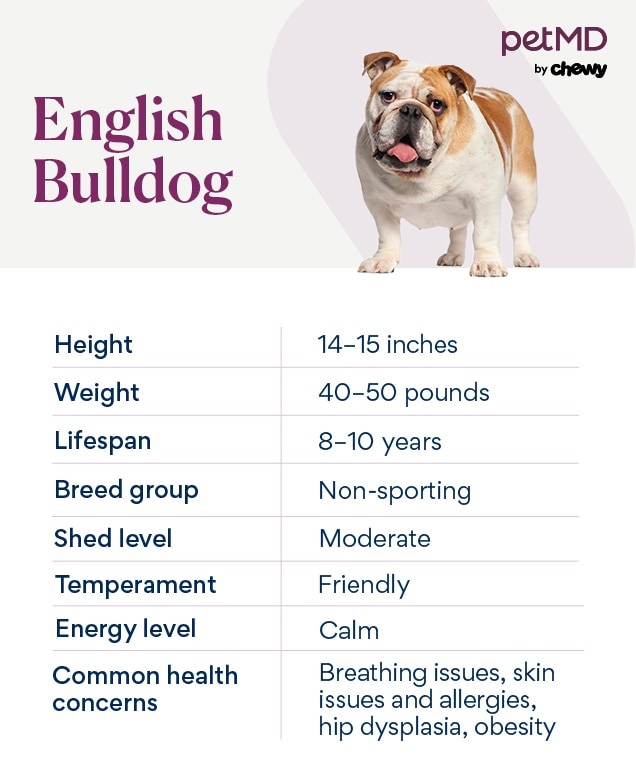
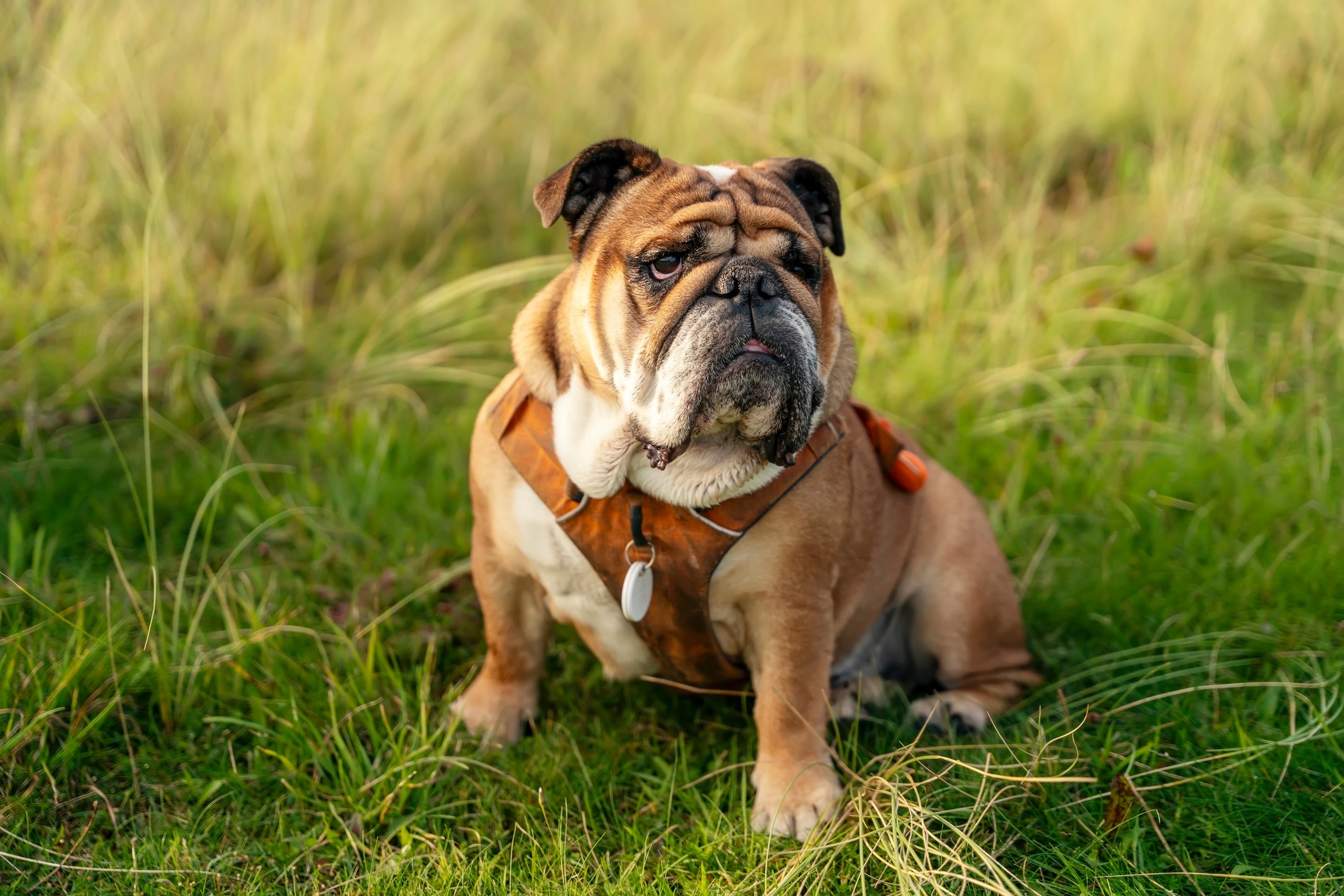
Bulldogs, commonly called English Bulldogs, are well known for their wide stance, muscular low profile, and short and wrinkled face, often with an underbite. Though short (at only 14–15 inches tall at the shoulder), Bulldogs weigh a sturdy 40–50 pounds. They have drooping lips with many loose skin wrinkles and folds throughout their face and neck.
Bulldogs unfortunately got their start as bull-baiters and butcher’s dogs (controlling animals for slaughter), according to the Bulldog Club of America. But after generations of selective breeding, they’re now calm—even lazy—companions who make great family dogs.
Caring for an English Bulldog
The English Bulldog is a friendly dog who can make a wonderful family pet. But they need the right family to thrive in, and potential pet parents need to know what to expect before bringing home a Bulldog puppy.
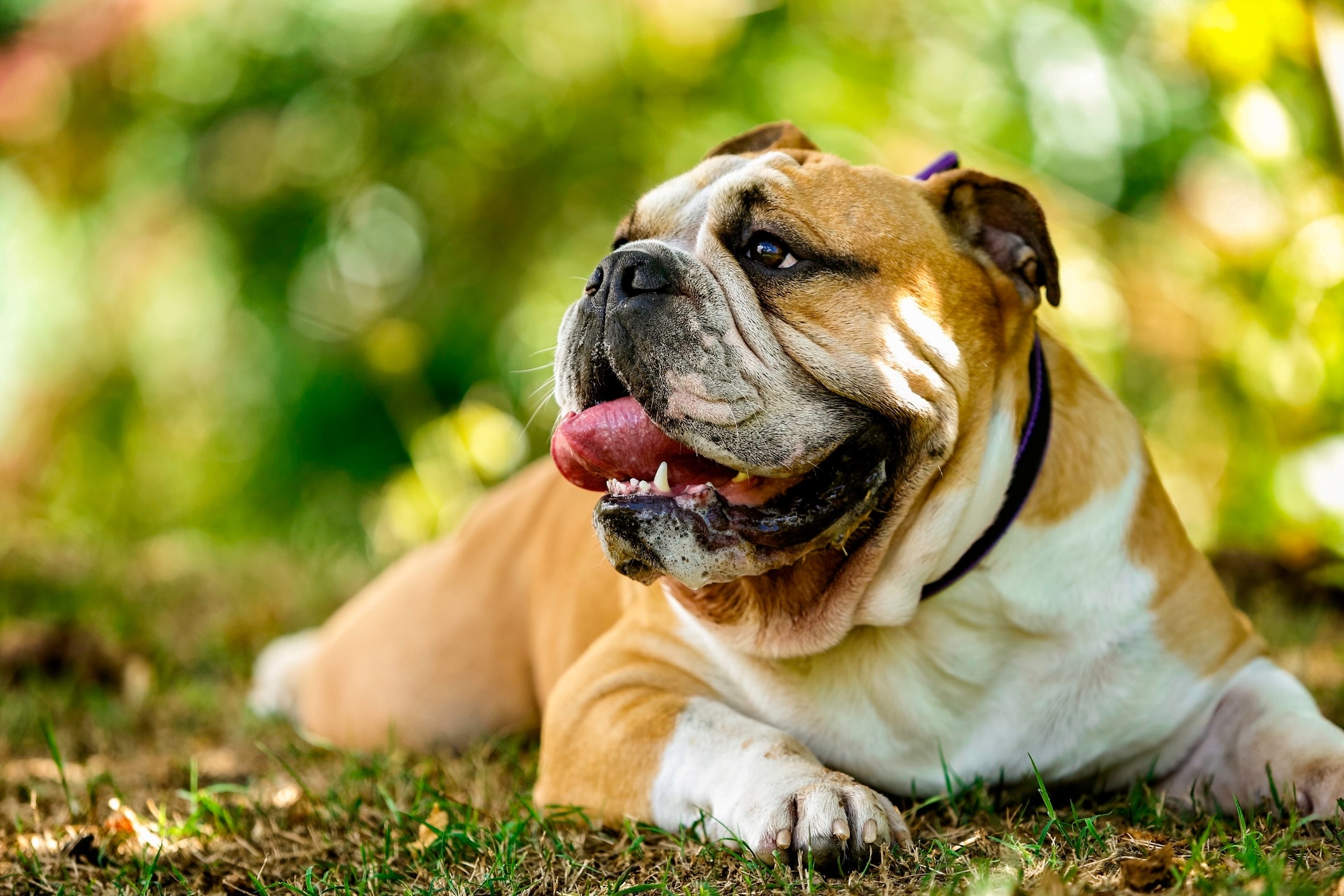
As a brachycephalic (short-nosed) breed, English Bulldogs are not well-adapted to hot climates. When it’s hot, ensure your Bulldog has access to shade, water, and AC at all times, and restrict any neighborhood walks to cooler times of the day (morning and evening).
Their short snouts also mean this breed is not known for being particularly quiet—there’s lots of panting, snorting, and snoring. And their wrinkly skin will require frequent maintenance to prevent skin infections.
English Bulldog Health Issues
The average English Bulldog lifespan is 8–10 years, shorter than average for a medium-sized dog breed. The unique physical traits of the Bulldog make the breed predisposed to many medical concerns.
Some of these problems may require lifelong treatment or surgery, so this dog breed can become expensive. Pet insurance is a great option if you’re considering adding an English Bulldog puppy to your family.
Brachycephalic Obstructive Airway Syndrome (BOAS)
Bulldogs commonly have brachycephalic obstructive airway syndrome (BOAS). This condition is caused by a combination of anatomical abnormalities that can be present due to the breed’s flat face, including:
-
Narrowed nose openings
-
Elongated soft palate in the mouth
-
Extra tissue in the larynx
-
Compressed/distorted nasal passages
-
Narrowed trachea (windpipe)
All of this leads to difficulty breathing and a propensity to overheat.
Excessive weight can make symptoms worse, so it’s important to keep your Bulldog fit and slim. Some Bulldogs even need surgery to correct these anatomic abnormalities to live a relatively normal life.
Skin Fold Pyoderma
The wrinkles around a Bulldog’s face and body can cause skin issues.
Any time an English Bulldog gets wet, their wrinkles can trap moisture if they are not properly dried. This warm, moist environment provides the perfect habitat for bacteria and/or yeast growth—commonly referred to as skin fold pyoderma.
To help prevent pyoderma, clean your Bulldog's skin folds with a medicated wipe and properly dry them. This keeps bacteria and yeast from building up and prevents moisture from becoming trapped.
Allergies
Allergies commonly affect Bulldogs, which can lead to skin infections as well.
Environmental allergies, food allergies, and flea and insect allergies can all cause skin issues. Depending on the allergy, your dog may require a special diet, medication, or medicated shampoo to help manage and alleviate symptoms.
Hip Dysplasia
It’s extremely common for Bulldogs to develop hip dysplasia, a condition in which the hip joint does not develop properly leading to instability. Over time, this instability leads to painful arthritis.
There is testing available (PennHIP screening, for example) to detect early hip dysplasia. Reputable English Bulldog breeders will screen their dogs for this genetic condition.
If your Bulldog is diagnosed with hip dysplasia, there are a few options for treatment and long-term management, including medications, joint supplements, and surgery.
Weight management is also important, because any excess weight will exacerbate the issue and increase discomfort for the dog.
Entropion
The English Bulldog can develop entropion, which is the inward rolling-in of the eyelids (usually the lower eyelids). This condition causes hair on the eyelid to make contact with the surface of the eyeball.
Entropion can irritate the eye and lead to ulcers, causing redness, pain, swelling, and discharge.
While eye products including artificial tears and pain medication can help these symptoms, surgery is usually needed for permanent relief.
Obesity
The English Bulldog is prone to obesity, and the extra weight and inflammation it’s associated with can exacerbate other health concerns.
To help prevent unnecessary weight gain, be diligent about the type and amount of food you give your Bulldog. This is extremely important for all dog breeds, but especially for Bulldogs. These flat-faced dogs are sensitive to heat and prone to breathing difficulties, so exercise can be difficult for them, particularly when they are overweight.
Other Health Problems
Bulldogs are at higher than average risk for a number of other health problems, including:
What To Feed an English Bulldog
Due to their unique anatomy, it’s extra important to keep Bulldogs at a healthy weight.
English Bulldog puppies need a high-quality puppy food that meets nutritional standards set by the Association of American Feed Control Officials (AAFCO). Older English Bulldogs (7 years old and older) can benefit from a high-quality senior dog food that’s also AAFCO-compliant.
There are some dog foods on the market that are specifically formulated for Bulldogs. These breed-specific diets offer a special dry kibble shape for easier eating and certain ingredients to promote gastrointestinal, joint, and skin health.
Talk to your vet to find the best food for English Bulldogs.
Dog treats should never be more than 10% of a dog's daily intake—and if your pup is overweight, cutting out most treats is recommended.
How To Feed a Bulldog
Feed an adult Bulldog twice a day, in the morning and evening. English Bulldog puppies need to eat more frequently (three or four times daily).
Some English Bulldogs may require a slow feeder bowl so they don’t eat too quickly, which can result in digestive problems.
You can also use puzzle toys, which require your dog to think and interact with the feeder to get to their kibble. This can be a great form of mental stimulation.
How Much To Feed a Bulldog
In general, the amount of dog food offered should be based on the ideal weight of your dog. The AAFCO-compliant dog food packaging will give you feeding guidelines, and your veterinarian can help tailor recommended portion sizes to your specific Bulldog based on their age, lifestyle, and health.
Nutritional Tips for Bulldogs
Because of their health considerations, there are many dog supplements that can help maintain the overall health of your Bulldog. These include:
-
Omega-3 fatty acids, found in fish oil and in some dog food formulas
-
Joint supplements like those that contain glucosamine
-
Immune-boosting supplements, which can also help with overall health maintenance.
Talk with your veterinarian to learn which supplements make the most sense for your English Bulldog.
Behavior and Training Tips for an English Bulldog
Bulldog Personality and Temperament

The English Bulldog is typically friendly, loyal, and good with other pets and children. The official breed standard refers to the Bulldog as “equable and kind, resolute and courageous.” Like every dog, Bulldogs need to be well-trained and socialized to be confident and well-mannered.
Despite their reputation for being lazy, Bulldogs benefit from daily exercise. They typically don’t need strenuous activity, but more gentle forms of exercise are beneficial, especially in does who are overweight.
Bulldogs with brachycephalic obstructive airway syndrome might not tolerate exercise without having breathing issues. For these dogs, several short, leashed walks a day in a cool environment are recommended, 10–15 minutes at a time.
On walks, use a dog harness instead of clipping their leash to a collar. This will help your English Bulldog breathe easier.
If temperatures are too hot outside, a game of fetch inside or a puzzle toy will suffice.
Bulldog Behavior
Although the English Bulldog is quite docile, they can be curious in new situations. They are affectionate toward those they know and strangers alike.
Bulldogs aren’t known to be excessive barkers or diggers, but boredom in dogs can lead to destructive behaviors. Make sure your pup has enough mental stimulation and attention.
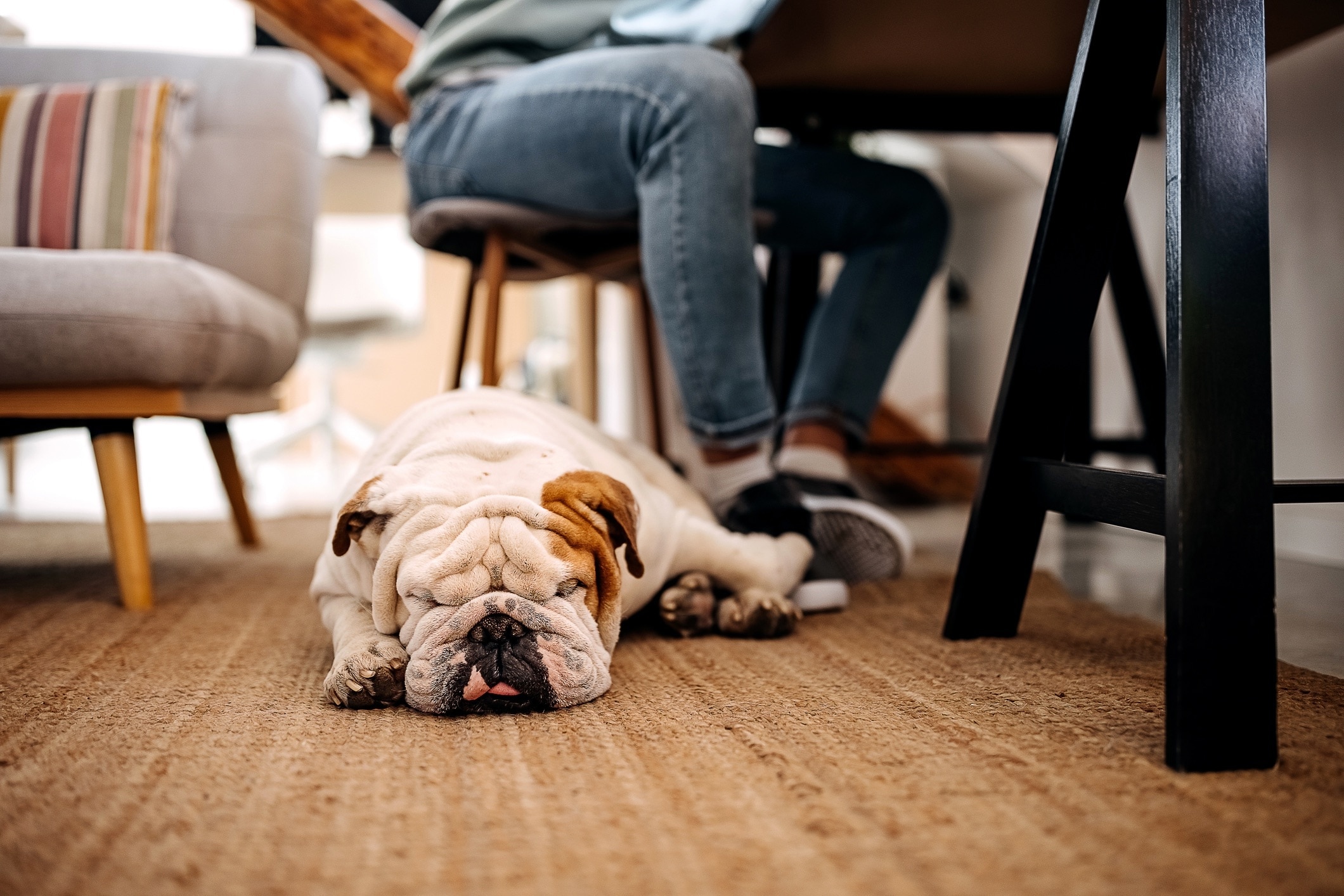
English Bulldogs are calm—even lazy—companions who make great family dogs.
Bulldog Training
Begin training and socializing your English Bulldog puppy as soon as you bring them home. Like all dogs, Bulldogs respond best to positive reinforcement training.
Just be mindful about how many treats you’re giving your dog during training sessions, as treats can lead to unwanted weight gain. Treats should never make up more than 10% of your dog’s daily calorie intake.
Fun Activities for Bulldogs
-
Walks
-
Backyard and indoor play
-
Tug-of-war
-
Cuddling and snoozing
-
Puzzle toys
English Bulldog Grooming Guide
The English Bulldog has a short, smooth hair coat that sheds moderately. Their coats can come in a wide range of colors and combinations: red, white, fawn, or brindle, to name just a few.
Whether you have a white English Bulldog or a brindle English Bulldog, their wrinkly skin requires frequent maintenance. To help keep their dog healthy, pet parents need to be diligent and thorough about their skin and coat care.
Skin Care
The skin wrinkles and folds around a Bulldog’s face, neck, and tail should be evaluated and cleaned daily.
Use a soft, dry cloth or dog-friendly wipe to gently wipe out debris. It’s important that you fully dry wrinkles after cleaning to prevent the growth of bacteria in trapped moisture.
Coat Care
Bathe your dog every month or two, giving special attention to their skin wrinkles/folds. Be sure that skin wrinkles are clear of debris and gently dried with a soft cloth after bathing or splashing in water to help prevent skin infection. More frequent bathing may be necessary if your dog has recurrent skin problems.
Brush your English Bulldog once a week with a soft bristle brush to help maintain a healthy coat and remove shed hair.
Eye Care
Because English Bulldogs can be prone to eye issues or allergies that cause eye discharge, you may need to clean around their eyes routinely. This can be done using pet-safe wipes—but again, make sure that you always fully dry the skin after cleaning.
Talk to your vet if you notice any changes in your dog’s eyes.
Ear Care
After every bath, clean your Bulldog’s ears with a veterinary-recommended cleaner that includes a drying agent to help prevent ear infections.
Dental Care
The Bulldog’s flat face makes the breed susceptible to dental disease because their teeth can be overcrowded and quickly accumulate plaque and tartar.
The best way to prevent this is to brush your dog’s teeth every day with a vet-approved toothbrush and toothpaste. You’ll also need to schedule routine dental cleanings at your vet’s recommendation.
Considerations for Pet Parents
If you’re thinking about bringing home a Bulldog, there are some major considerations. Namely, the breeds’ potential health issues, sensitivity to heat, weight management requirements, and grooming needs.
These considerations are important because they can greatly affect the overall lifestyle of the English Bulldog. They may require lifelong medical care and may ultimately need surgical intervention or a referral to a specialist veterinarian to fully alleviate these medical issues.
However, pet parents who are knowledgeable about the breed and ready to meet a Bulldog’s needs will find a loving companion.
English Bulldog FAQs
How long do English Bulldogs live?
The typical English Bulldog life expectancy is 8–10 years.
Is an English Bulldog a good family dog?
Yes! Most socialized English Bulldogs make excellent family companions, especially with children and other pets.
Are Bulldogs smart dogs?
Absolutely. Don’t let their easygoing behavior fool you; Bulldogs do well with training and they are loyal to their pet parents.
How much are English Bulldogs?
When purchased through an ethical breeder, English Bulldog puppies cost as much as several thousand dollars. However, there are English Bulldog rescue organizations that have dogs available for adoption at lower costs. Some animal shelters may have English Bulldog puppies and adults available for adoption.
French Bulldog vs. English Bulldog—what’s the difference?
English Bulldogs and French Bulldogs share similarities but are different breeds. An easy way to differentiate the two is their ears: the Frenchie has large, perky ears that stand straight up on their head, while the English Bulldog’s ears are smaller and folded over. French Bulldogs are also smaller and slimmer than English Bulldogs.
What’s the difference between American vs. English Bulldogs?
At 60–100 pounds, American Bulldogs are much larger than English Bulldogs. They also have very different energy levels—American Bulldogs are active and love exercise, while English Bulldogs tend to be more content with snoozing on the couch.
Are Old English Bulldogs and English Bulldogs the same?
No, English Bulldogs are not the same as Old English Bulldogs. Old English Bulldogs (or Olde English Bulldogges) are not recognized by the American Kennel Club, but they are recognized by the United Kennel Club, which says they’ve been bred to closely resemble the English Bulldog’s ancestors.