9 Cat Noises and What They Mean


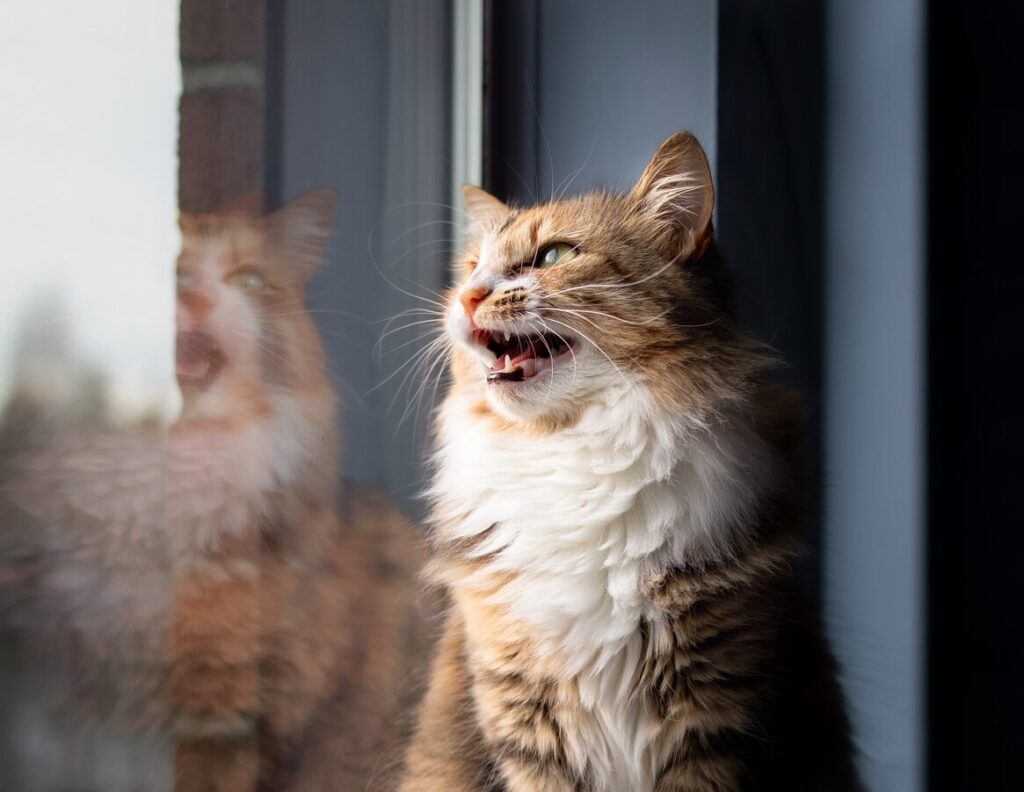
Cats use a wide variety of sounds to communicate their needs, emotions, and intentions.
From meows and purrs to chirps, hisses, and yowls, each cat sound can provide clues about how your cat is feeling and what they may be trying to tell you.
Learning to recognize common cat sounds—along with your cat’s body language—can help you better understand your pet and identify potential health concerns early.
Key Takeaways
- Cats use many different vocalizations to communicate with humans and other animals.
- Different cat sounds can indicate contentment, excitement, frustration, fear, pain, or illness.
- Context and body language are important when interpreting cat noises.
- Some sounds, such as growling and hissing, are warning signals.
- Changes in a cat’s normal vocalizations should be evaluated by a veterinarian.
1. Meowing
Meowing is one of the most common cat sounds and is primarily used by adult cats to communicate with humans.
While kittens meow to get their mother’s attention, adult cats typically reserve meowing for interactions with people rather than other cats.
What Does a Cat Meow Mean?
Cats may meow for many reasons, including:
- Greeting a person
- Inviting play
- Expressing excitement
- Showing frustration
- Requesting attention
- Asking for food or a cat treat
- Wanting access to a room or outdoor space
The meaning often depends on the situation, the cat’s body language, and the tone of the vocalization.
When Meowing May Signal a Problem
Not all meows are requests or greetings.
A lower-pitched, longer, or more persistent meow may sometimes indicate:
If your cat begins meowing more frequently than usual or if their vocalizations suddenly sound different, contact your veterinarian for guidance.
2. Purring
Purring is often associated with happiness and contentment, but it can also occur when a cat is stressed, sick, frightened, or in pain.
A purr is a low, continuous, rhythmic sound produced during breathing and is one of the most recognizable cat noises.
While many cats purr when they are relaxed and enjoying attention, purring is not always a sign that a cat is happy. Some cats also purr as a self-soothing behavior during stressful or uncomfortable situations.
Like all forms of feline communication, purring should be interpreted alongside a cat’s body language.
Purring may indicate discomfort or unhappiness if your cat is also showing signs such as:
- Flattened or backward-facing ears
- Dilated pupils
- A tense or hunched posture
- Behavior that is unusual for them
3. Chirping
Chirping is a short, high-pitched cat sound that is often used to communicate excitement, attention, or interest in something nearby.
A chirp sounds somewhat like a bird call, which is how it gets its name. A series of chirps is commonly referred to as chirrups.
Mother cats often use chirps as contact calls to communicate with their kittens. Adult cats may also chirp to get attention or let people and other animals know where they are.
Chirping at Birds and Other Prey
One of the most common situations in which cats chirp occurs when they spot prey they cannot reach, like when they birds or squirrels outside a window while sitting on a window perch.
In these moments, chirping is often thought to reflect excitement combined with a degree of frustration because the cat can see the prey but cannot pursue it.
4. Trilling
Trilling is a friendly, high-pitched vocalization that cats often use to greet people and express positive social interactions.
A trill sounds similar to a purr but is produced at a higher pitch and with a softer voice.
Cats commonly trill when greeting their human family members, and many pet parents hear this sound when arriving home or interacting with their cat during the day.
Some cats may also trill as a way of thanking their humans for something they enjoy, such as a favorite snack or affectionate attention.
Because trilling is generally considered one of the most amicable feline vocalizations, it is often associated with positive emotions and social bonding.
5. Chattering and Twittering
Chattering and twittering are prey-related cat sounds that often occur when a cat spots something they want to hunt but cannot reach.
Chattering, sometimes called twittering, is a low smacking or clicking sound created by the rhythmic movement of a cat’s jaws.
Unlike many other feline vocalizations, chattering is usually produced without the vocal cords and is often described as a rapid, teeth-clacking sound.
Chattering frequently occurs alongside chirping and is thought to reflect a combination of excitement, focus, and frustration when a cat is unable to pursue prey.
Because domestic cats retain strong hunting instincts, this behavior is commonly observed even in well-fed indoor cats.
6. Growling and Hissing
Growling and hissing are warning sounds that cats use when they feel threatened, frightened, uncomfortable, or defensive.
Cats that are growling or hissing may also display:
- An arched back
- Flattened ears
- A twitching tail
- Puffed-up fur
- The classic "Halloween cat" posture
What Does a Cat Growl Mean?
A growl is a low, rumbling vocalization intended to warn off a perceived threat.
Cats may growl at people, other cats, dogs, or unfamiliar situations when they feel unsafe or overwhelmed.
As fear and stress increase, growling may become more intense and may precede aggressive behavior.
What Does a Cat Hiss Mean?
A hiss is a low, drawn-out sound created by the rapid expulsion of air through the mouth.
When hissing, cats often display exposed teeth and an open mouth. Hissing is frequently an involuntary response to a perceived threat or startling situation.
How Should You Respond?
- Stop the interaction immediately.
- Give the cat space.
- Avoid picking up or restraining the cat.
- Remove the source of stress if possible.
If your cat is hissing at another animal, object, or environmental trigger, safely remove or distance the perceived threat when appropriate.
Never attempt to force interaction with a growling or hissing cat. A frightened cat may escalate to scratching or biting if they feel cornered or unable to escape.
7. Spitting
Spitting is an intense defensive cat sound that typically occurs when a cat feels suddenly threatened or frightened.
A spit is a short, explosive burst of noise that is often accompanied by a quick lashing-out movement or startle response.
This vocalization is essentially a more intense version of a hiss and is usually an involuntary reaction to a perceived threat, enemy, or frightening situation.
Because spitting is a strong defensive warning signal, it is often seen alongside other fear-related behaviors such as hissing, flattened ears, puffed-up fur, and defensive body postures.
How Should You Respond?
If your cat spits, immediately stop the interaction and give them space.
Avoid attempting to pet, pick up, or restrain a spitting cat, as they may escalate to scratching or biting if they feel further threatened.
Whenever possible, identify and remove the source of fear or stress while allowing the cat an opportunity to retreat to a safe location.
8. Yowling and Howling
Yowling and howling are often signs that a cat is experiencing physical discomfort, emotional distress, or another significant concern.
A yowl is typically described as a loud, drawn-out meow, while a howl is similar but usually shorter in duration.
Medical and Emotional Causes
Cats may yowl or howl when experiencing:
- Pain or illness
- Anxiety or worry
- Frustration
- Boredom
- Confinement or environmental stress
Because these sounds are frequently associated with distress, sudden or excessive yowling should always be taken seriously.
Cognitive Changes in Older Cats
Senior cats may yowl because of cognitive dysfunction syndrome, a condition similar to dementia in humans.
Confusion, disorientation, and altered sleep-wake cycles can contribute to increased vocalization in aging cats.
Separation Anxiety
If a cat yowls primarily when family members are away from home, separation anxiety may be a contributing factor.
Territorial and Mating Communication
Yowling and howling are not always signs of illness.
Cats may also use these vocalizations to:
- Warn other cats away from their territory
- Communicate during territorial disputes
- Attract potential mates
- Participate in mating-related behaviors
Unneutered cats are especially likely to yowl as part of reproductive communication.
When To Contact a Veterinarian
Because yowling can be associated with pain, illness, anxiety, or cognitive decline, any new or unexplained increase in these vocalizations should be discussed with your veterinarian.
9. Caterwauling
Cat caterwauling is a loud, drawn-out vocalization most commonly associated with unspayed female cats in heat, but it can also signal pain, fear, discomfort, or cognitive decline.
This vocalization is often described as a long, mournful whine and is one of the loudest sounds a cat can make.
While caterwauling is commonly associated with reproductive behavior in unspayed female cats, the sound can occur in a variety of situations and should always be evaluated in context.
Pay Attention to Changes in Vocalization
Although different cat sounds have different meanings, a sudden change in your cat’s vocal behavior should never be ignored.
Changes in the frequency, intensity, duration, pitch, or pattern of vocalizations may indicate:
- Pain
- Illness
- Anxiety
- Cognitive dysfunction
- Other underlying medical or behavioral concerns
When To Contact a Veterinarian
If your cat begins vocalizing more than usual or develops new sounds that are out of character, schedule a veterinary examination.
Some cats may require treatment for pain, anxiety, or underlying medical conditions to address the root cause of the vocalization.
Cat Sounds FAQs
Why do cats meow at humans?
Adult cats primarily use meowing to communicate with people, often to request attention, food, play, or access to a space.
What does cat purring mean?
Purring often signals contentment, but it can also occur when a cat is frightened, stressed, sick, or in pain.
Why do cats chirp at birds?
Cats commonly chirp when they see prey they cannot reach, such as birds or squirrels outside a window.
Why is my cat yowling?
Yowling may indicate pain, illness, anxiety, frustration, cognitive decline, or mating behavior, depending on the situation.
What does it mean when a cat hisses?
Hissing is a warning signal that indicates a cat feels threatened, frightened, or uncomfortable.
When should I worry about cat vocalizations?
Any sudden change in the frequency, pitch, intensity, or duration of your cat’s vocalizations should be discussed with your veterinarian.